
A lawn tennis court is more than just a rectangular playing surface—it’s a stage where agility, strategy, and endurance come together in a fast-paced dance. Whether you’re dreaming of installing one in your backyard or managing a professional sports facility, understanding the ins and outs of a lawn tennis court can make all the difference. From the smooth bounce of the ball to the crisp white boundary lines, every detail plays a role in shaping the game experience.
You might think a tennis court is just grass and a net, right? Not quite. Behind every well-maintained court lies careful planning, engineering, and ongoing care. The surface must be level, drainage must be flawless, and materials must withstand changing weather conditions. A poorly designed court can turn a friendly match into a frustrating experience with unpredictable ball bounces and slippery patches.
Lawn tennis courts are designed according to international standards, especially when built for competitive play. However, residential courts offer flexibility in design and material selection. Some prefer the classic elegance of natural grass, while others opt for durable hard courts or modern artificial turf. Each surface influences ball speed, bounce, and player movement.
In this comprehensive guide, we’ll break down everything you need to know about lawn tennis courts—from construction and costs to maintenance and sustainability. By the end, you’ll have a clear roadmap to design, build, or maintain a court that performs beautifully and stands the test of time.
Table of Contents
What Is a Lawn Tennis Court?
A lawn tennis court is a rectangular playing area specifically designed for the sport of tennis. Traditionally, the term “lawn tennis” referred to the game being played on natural grass surfaces. Over time, the phrase stuck—even though modern courts now come in a variety of materials including clay, asphalt, concrete, and synthetic turf.
At its core, a lawn tennis court measures 78 feet in length. The width varies: 27 feet for singles matches and 36 feet for doubles. A net divides the court in half, standing 3 feet high at the center. While these numbers might seem simple, they are the foundation of every professional tournament worldwide.
But a lawn tennis court isn’t just about dimensions. It’s about performance. The surface must provide consistent ball bounce and safe footing for players who sprint, pivot, and slide. The court must also include clear boundary lines, a firm foundation, and adequate runoff space around the edges for safe movement.
Think of the court as the canvas and the players as the artists. If the canvas is flawed—cracked, uneven, or poorly maintained—the masterpiece suffers. That’s why the design and quality of a tennis court directly influence gameplay.
There are also recreational and professional variations. Residential courts might incorporate lighting for evening play, decorative fencing, or customized color schemes. Professional courts must meet strict regulations set by governing bodies like the International Tennis Federation (ITF).
In short, a lawn tennis court is a carefully engineered sports surface designed to provide fairness, safety, and performance. It’s not just grass and paint—it’s precision built into every inch.
Brief History and Evolution of Lawn Tennis Courts
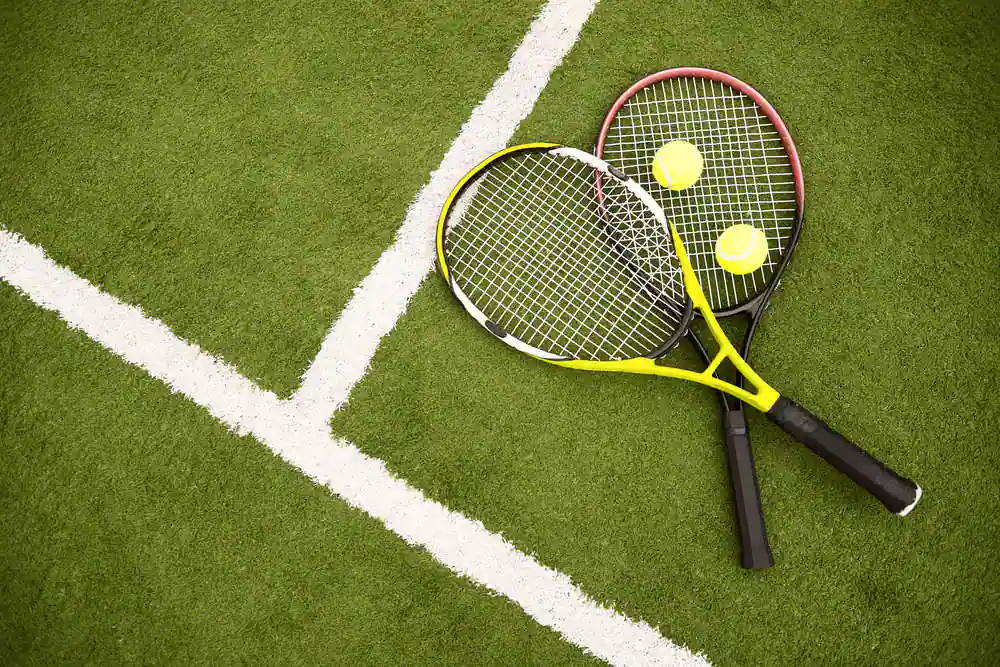
The story of the lawn tennis court begins in 19th-century England. Before modern tennis existed, a game called “real tennis” was played indoors on complex courts with walls and galleries. But in 1873, Major Walter Clopton Wingfield introduced a simplified version of the game that could be played outdoors on grass lawns. That innovation changed everything.
Early lawn tennis courts were exactly what the name suggests—flat stretches of trimmed grass. British aristocrats embraced the sport, playing matches in private gardens and country estates. The All England Club adopted grass courts for Wimbledon in 1877, and to this day, Wimbledon remains the most iconic grass-court tournament in the world.
As tennis spread globally, players began experimenting with different surfaces. Clay courts gained popularity in France and Spain due to their slower pace and high bounce. Hard courts emerged in the 20th century as a durable, low-maintenance alternative suitable for various climates.
Technology then stepped in. Modern courts now use advanced drainage systems, shock-absorbing layers, and synthetic materials designed to improve player comfort and reduce injuries. Artificial turf courts mimic the feel of grass while requiring less upkeep.
The evolution of the lawn tennis court reflects the evolution of the sport itself—faster serves, more powerful groundstrokes, and greater athletic demands. Today’s courts are engineered with precision, using laser leveling tools and specialized coatings to ensure perfect consistency.
From aristocratic lawns to high-tech arenas, the lawn tennis court has traveled a long journey. Yet at its heart, it remains the same: a rectangular battleground where skill meets strategy.
Types of Lawn Tennis Court Surfaces
When it comes to lawn tennis courts, the surface matters more than you might think. The type of surface determines ball speed, bounce height, player movement, and even match duration. Choosing the right one depends on climate, budget, maintenance capacity, and playing style.
Broadly speaking, tennis courts fall into four main categories: grass, clay, hard, and artificial turf. Each has its own personality—almost like different characters in the same story.
Grass courts are fast and elegant but demand high maintenance. Clay courts are slower, favoring baseline rallies and strategic play. Hard courts offer balance and durability, making them the most common worldwide. Artificial turf provides a middle ground, mimicking grass with less upkeep.
The International Tennis Federation even classifies surfaces by pace, ranging from slow to fast. This affects how players train and compete. For example, serve-and-volley players thrive on faster surfaces like grass, while defensive players often excel on clay.
Here’s a simple comparison:
| Surface Type | Speed | Maintenance Level | Cost Range | Popular Events |
|---|---|---|---|---|
| Grass | Fast | High | High | Wimbledon |
| Clay | Slow | Medium-High | Medium | French Open |
| Hard Court | Medium | Low-Medium | Medium | US Open |
| Artificial Turf | Medium-Fast | Low | Medium | Clubs/Private |
Understanding these surfaces is crucial before building or renovating a lawn tennis court. The right choice ensures not just better gameplay—but long-term satisfaction.
Natural Grass Courts
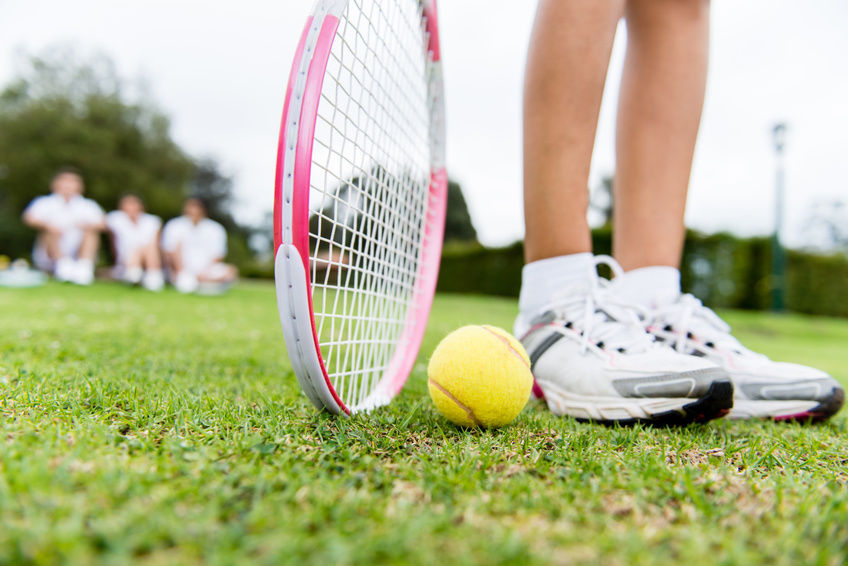
Natural grass courts are the original lawn tennis courts—the kind that carry tradition, elegance, and a certain old-world charm. When you picture Wimbledon, you’re picturing the pinnacle of grass-court tennis. There’s something almost poetic about players gliding across a perfectly manicured green surface, the ball skimming low and fast. But behind that beauty lies a serious commitment to care and precision.
Grass courts are known for their speed. The ball stays low and moves quickly after the bounce, rewarding players with strong serves and sharp volleys. Points tend to be shorter, and reflexes become your best friend. If you love fast-paced tennis, grass is your playground.
However, maintaining a natural grass tennis court is no small task. It requires:
- Regular mowing (often daily during playing season)
- Precise irrigation management
- Seasonal reseeding
- Soil aeration
- Rolling to ensure a level surface
Drainage is absolutely critical. Without proper sub-surface drainage systems, rain can turn your beautiful court into a muddy mess. That’s why professional grass courts are built with advanced drainage layers beneath the soil.
Climate also plays a huge role. Grass thrives in moderate environments but struggles in extreme heat or heavy rainfall. If you live in a region with harsh weather, maintaining consistent grass quality can be challenging and costly.
Still, many homeowners and clubs choose grass for its prestige and playing experience. It feels soft underfoot, reducing stress on joints compared to harder surfaces. But make no mistake—it demands dedication. A grass court is like a luxury sports car: stunning to own, thrilling to use, but high-maintenance.
If you’re considering building a natural grass lawn tennis court, be prepared for ongoing care. The reward? A classic court that offers unmatched beauty and a truly authentic tennis experience.
Clay Courts
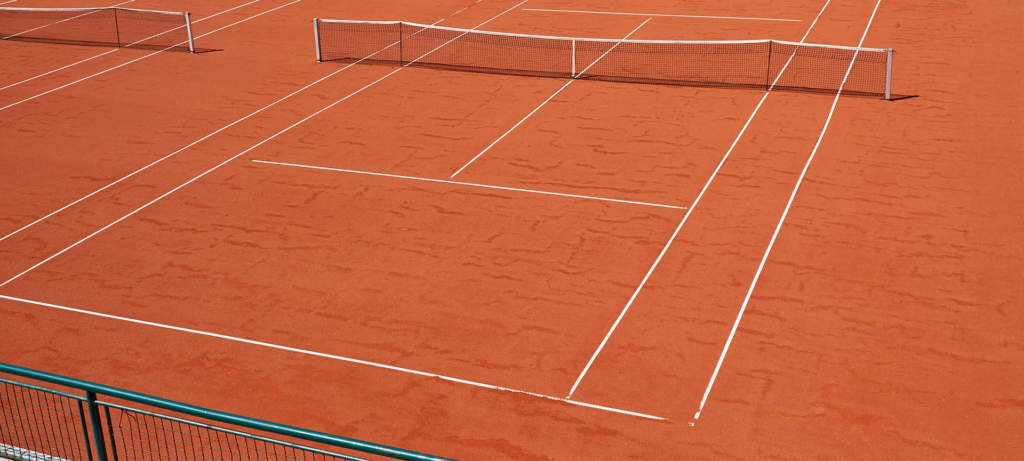
Clay courts bring a completely different personality to lawn tennis. If grass is fast and flashy, clay is patient and strategic. The surface slows the ball down and produces a higher bounce, leading to longer rallies and intense baseline exchanges. It’s no surprise that some of the most physically demanding matches in tennis history have taken place on clay.
There are two primary types of clay courts:
- Red Clay (European Clay) – Made from crushed brick.
- Green Clay (Har-Tru) – More common in the United States.
Red clay is slower, while green clay is slightly faster but still softer than hard courts. The soft surface allows players to slide into shots, which reduces impact stress on joints. That’s one reason many professional players prefer clay during long tournament seasons—it’s easier on the body.
However, clay courts require consistent maintenance. Daily brushing and watering are essential to maintain surface consistency and prevent dust buildup. Lines must be cleaned regularly, and the top layer often needs replenishment over time.
Advantages of clay courts include:
- Reduced injury risk due to softer surface
- Slower gameplay that encourages strategy
- Excellent drainage when properly constructed
But there are challenges too. Clay courts can become messy in heavy rain, and they demand routine grooming. If you neglect maintenance, the surface becomes uneven and unpredictable.
Construction involves creating a solid foundation, followed by multiple layers of crushed stone and fine clay material. Proper grading ensures effective drainage, which is vital for long-term durability.
If you enjoy long rallies, tactical battles, and a surface that rewards patience, clay might be your ideal lawn tennis court choice. It’s not just a surface—it’s a test of endurance and mental strength.
Hard Courts
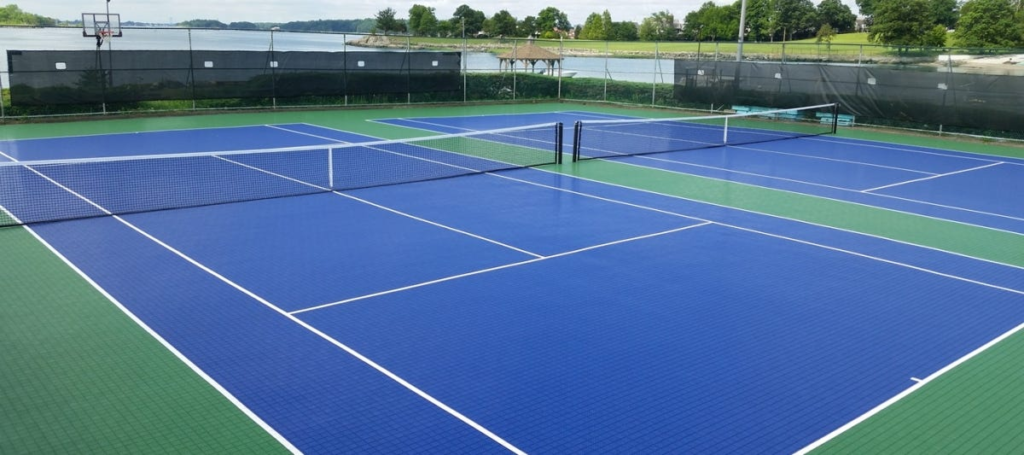
Hard courts are the most common type of lawn tennis court in the world—and for good reason. They strike a balance between speed and control, durability and affordability. Most public parks, schools, and professional tournaments like the US Open and Australian Open use hard courts.
Typically made from asphalt or concrete and coated with acrylic layers, hard courts provide a consistent and predictable bounce. Unlike grass or clay, they require significantly less daily maintenance. That’s a big plus if you’re building a residential court and don’t want constant upkeep.
Hard courts can be customized with different surface coatings to adjust speed and cushioning. Some include shock-absorbing layers that reduce joint stress, making them more comfortable for frequent play.
Benefits of hard courts include:
- Low maintenance compared to grass or clay
- Durable and long-lasting
- Suitable for various climates
- Cost-effective over time
However, they are not entirely maintenance-free. Over time, cracks may develop due to temperature fluctuations. Resurfacing is typically needed every 4–8 years, depending on usage and weather conditions.
Hard courts are also less forgiving on the body compared to clay. The rigid surface can increase strain on knees and ankles during long matches. That said, modern cushioned systems have significantly improved comfort levels.
If you want reliability, durability, and versatility, a hard court is often the smartest investment. It’s like the all-terrain vehicle of tennis surfaces—steady, dependable, and ready for action year-round.
Artificial Turf Courts
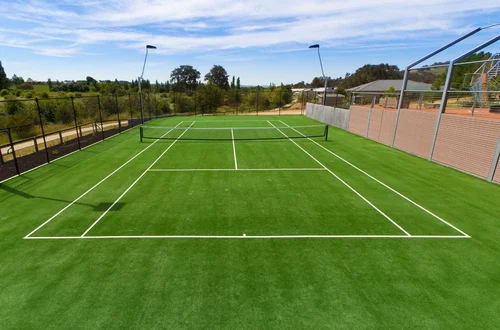
Artificial turf courts are the modern compromise between natural grass beauty and hard court practicality. Designed with synthetic fibers and often filled with sand or rubber granules, these courts mimic the feel of grass while dramatically reducing maintenance requirements.
For homeowners or clubs seeking a visually appealing lawn tennis court without the intense upkeep of real grass, artificial turf is an attractive option. The surface offers medium-fast play and a relatively consistent bounce.
Why choose artificial turf?
- Minimal watering required
- No mowing or reseeding
- Resistant to weather damage
- Lower long-term maintenance costs
Installation involves preparing a stable base, adding shock-absorbing layers, and laying the synthetic turf material. Drainage systems are integrated beneath the surface to prevent water accumulation.
One advantage is durability. Artificial turf courts can last 10–15 years with proper care. Basic maintenance includes brushing the surface to redistribute infill and occasional cleaning to remove debris.
However, extreme heat can cause the surface to become warmer than natural grass. Additionally, ball bounce may not perfectly replicate traditional grass play.
Artificial turf is ideal for residential settings where aesthetics and low maintenance are priorities. It blends the charm of a green court with the practicality of modern engineering.
Standard Lawn Tennis Court Dimensions and Layout
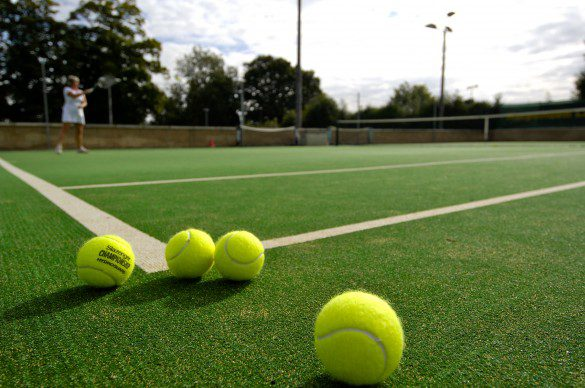
Precision is everything in tennis. A lawn tennis court must adhere to specific dimensions to ensure fairness and consistency. Whether you’re building a backyard court or a professional facility, understanding these measurements is non-negotiable.
The overall court length is 78 feet (23.77 meters). The width differs:
- 27 feet (8.23 meters) for singles matches
- 36 feet (10.97 meters) for doubles matches
The net divides the court into two equal halves and stands:
- 3 feet (0.91 meters) high at the center
- 3.5 feet (1.07 meters) high at the posts
Beyond the main playing area, additional space—called runoff area—is required around the court for player safety. Professional courts often include at least 12 feet behind baselines and 6 feet on each side.
Key court markings include:
- Baselines
- Singles sidelines
- Doubles sidelines
- Service lines
- Center service line
- Center mark
These lines define service boxes and playing boundaries. Precision in marking ensures accurate gameplay and reduces disputes during matches.
The orientation of the court also matters. Ideally, it should run north-south to prevent players from facing direct sunlight during play.
When designing a lawn tennis court, think beyond just lines and measurements. Consider space, safety, and visibility. Every inch contributes to a smooth playing experience.
Choosing the Right Location for a Lawn Tennis Court
Location can make or break your lawn tennis court project. You might have the best materials and construction plan, but if the site selection is poor, you’ll face ongoing challenges.
First, evaluate the soil. Stable, well-draining soil reduces structural issues. Avoid areas prone to flooding or heavy water retention.
Second, consider sunlight. A north-south orientation minimizes glare during morning and evening play. No one wants to lose a point because the sun was in their eyes.
Wind exposure is another factor. Strong crosswinds can disrupt ball trajectory. Installing windbreak fencing or planting natural barriers can help.
Drainage planning is essential. Even hard courts need efficient water runoff systems to prevent surface damage. Proper grading ensures rainwater flows away from the playing area.
Accessibility also matters. Ensure enough surrounding space for fencing, seating, and pathways.
Choosing the right location isn’t just practical—it’s strategic. It lays the groundwork for long-term durability and player satisfaction.
Step-by-Step Lawn Tennis Court Construction Process
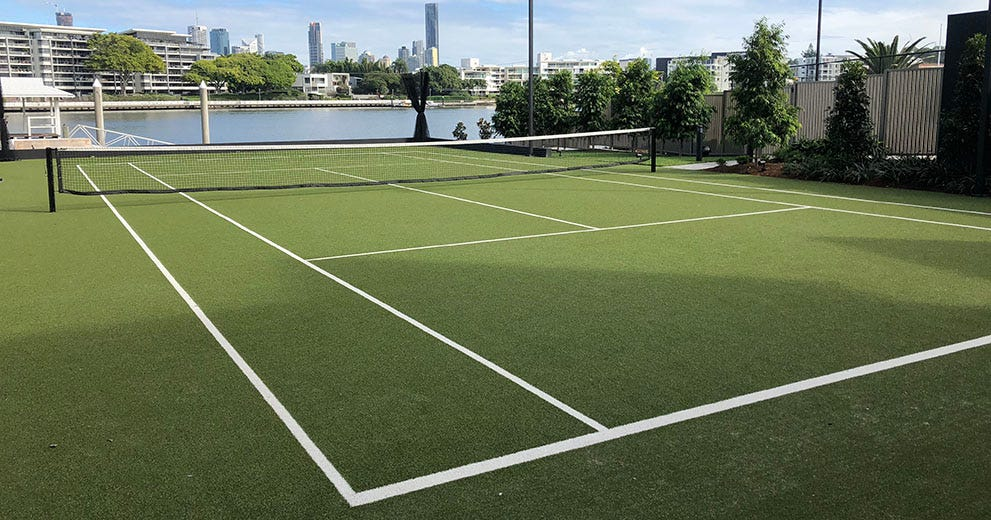
Building a lawn tennis court isn’t like laying down a patio or pouring a simple slab of concrete. It’s a layered, technical process where every step builds on the previous one. Think of it like constructing a cake—skip a layer or rush the baking, and the whole thing collapses. Precision, patience, and proper sequencing are everything.
The first phase is planning and design. This includes surveying the land, confirming measurements, testing soil conditions, and deciding on the surface type. At this stage, orientation (preferably north-south), drainage design, and access points are finalized.
Next comes site clearing and excavation. The area is leveled, vegetation removed, and soil excavated to the required depth. For most courts, this means digging down several inches to create room for the foundation layers.
Then comes the foundation base installation, which is arguably the most critical stage. Layers of crushed stone or aggregate are compacted carefully to create a stable and well-draining base. If the base isn’t solid, cracks and uneven surfaces will appear later—no matter how premium the top layer is.
After the base, the surface layer is installed. This varies depending on the court type:
- Asphalt or concrete slab for hard courts
- Compacted clay layers for clay courts
- Soil preparation and turf installation for grass courts
- Synthetic roll-out system for artificial turf
Once the surface cures or settles, line marking and net installation are completed. Precision measurement ensures compliance with official standards.
Finally, fencing, lighting, and accessories are added. The entire process can take several weeks to months, depending on complexity and weather conditions.
Cutting corners during construction is a mistake you’ll pay for later. A properly constructed lawn tennis court, however, can last decades with the right maintenance.
Cost of Building a Lawn Tennis Court
Let’s talk numbers. Building a lawn tennis court is an investment, and like any investment, costs vary depending on materials, location, and customization. There’s no single price tag—it depends on what kind of court you want and how professional you want it to be.
Here’s a rough breakdown by surface type:
| Surface Type | Estimated Cost Range |
|---|---|
| Grass Court | $25,000 – $60,000+ |
| Clay Court | $30,000 – $75,000 |
| Hard Court | $35,000 – $85,000 |
| Artificial Turf | $40,000 – $90,000 |
Why such a wide range? Because factors like drainage systems, fencing, lighting, land grading, and location all influence the final cost.
Additional expenses often include:
- Fencing ($5,000–$15,000)
- LED lighting systems ($10,000–$25,000)
- Seating and landscaping
- Ongoing maintenance tools
- Permits and inspections
Grass courts may have lower initial construction costs in some cases but higher long-term maintenance expenses. Hard courts, on the other hand, may cost more upfront but require less daily upkeep.
If you’re building a residential court, budgeting smartly is key. Always account for unexpected costs—like soil reinforcement or drainage improvements. Think long-term rather than short-term savings.
A lawn tennis court isn’t cheap, but for tennis lovers, it’s more than a structure—it’s a lifestyle upgrade.
Essential Lawn Tennis Court Maintenance Tips
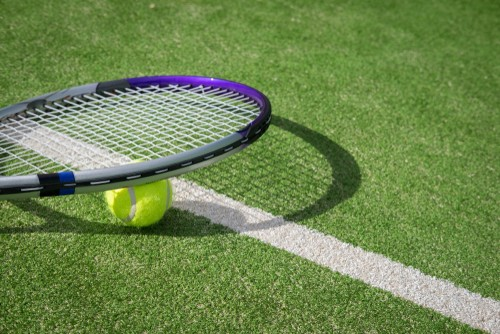
A lawn tennis court is only as good as its maintenance routine. You can build the most beautiful court in the neighborhood, but neglect it for a year and it’ll quickly lose its charm—and performance.
Maintenance depends heavily on surface type. Let’s break it down.
For grass courts, maintenance is almost daily during playing season. This includes mowing, watering, rolling, fertilizing, and repairing worn patches. Grass must be kept at an optimal height to ensure consistent ball bounce.
For clay courts, brushing and watering are essential. Clay dries out quickly, leading to dust and cracks. After play, dragging the surface smooth keeps it even. Lines should be cleaned regularly for visibility.
For hard courts, maintenance is simpler but still important. Regular sweeping removes debris. Pressure washing helps eliminate mold and stains. Small cracks should be sealed immediately to prevent expansion.
For artificial turf, brushing redistributes infill material and keeps fibers upright. Occasional deep cleaning prevents dirt buildup.
Seasonal maintenance checklist:
- Inspect drainage systems before rainy seasons
- Repair cracks or surface damage promptly
- Repaint lines when fading occurs
- Check net tension and replace worn nets
Routine care extends lifespan and protects your investment. Skipping maintenance is like skipping oil changes for your car—it may run fine for a while, but eventually, problems show up.
Consistency is the secret. A well-maintained court doesn’t just look better—it plays better.
Benefits of Having a Lawn Tennis Court
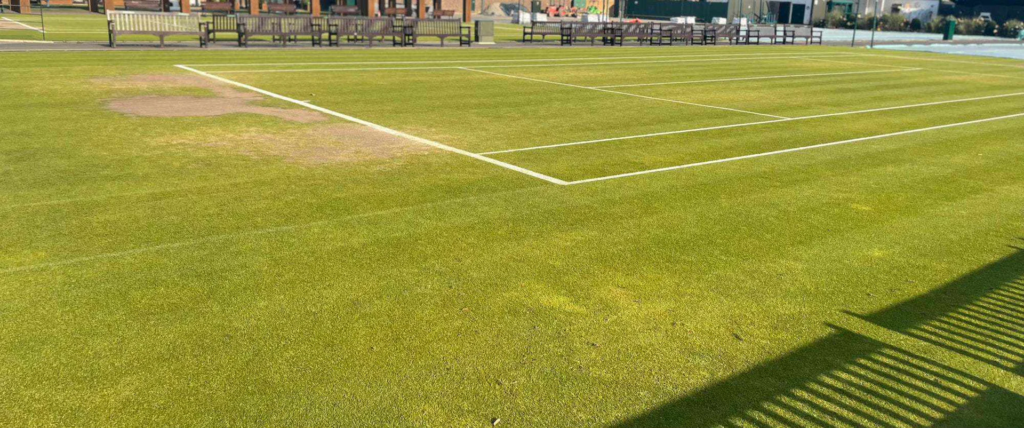
Owning or managing a lawn tennis court comes with more than just bragging rights. It’s a multi-dimensional investment that benefits health, social life, and even property value.
Health and Fitness Benefits
Tennis is a full-body workout disguised as a game. It improves:
- Cardiovascular endurance
- Coordination and balance
- Muscle tone and strength
- Mental sharpness
Having direct access to a court makes regular exercise effortless. No commute. No waiting. Just grab your racket and play.
Social and Recreational Benefits
A tennis court becomes a social hub. Family matches, friendly tournaments, weekend gatherings—it naturally brings people together. It’s competitive yet inclusive, intense yet fun.
For clubs or communities, a court fosters engagement and camaraderie.
Property Value Enhancement
Here’s something practical: a well-built lawn tennis court can increase property value. Luxury homes with private sports facilities attract buyers seeking lifestyle features. While it may not guarantee a dollar-for-dollar return, it certainly enhances appeal.
Ultimately, a tennis court isn’t just about sport—it’s about lifestyle, wellness, and connection.
Common Problems and How to Fix Them
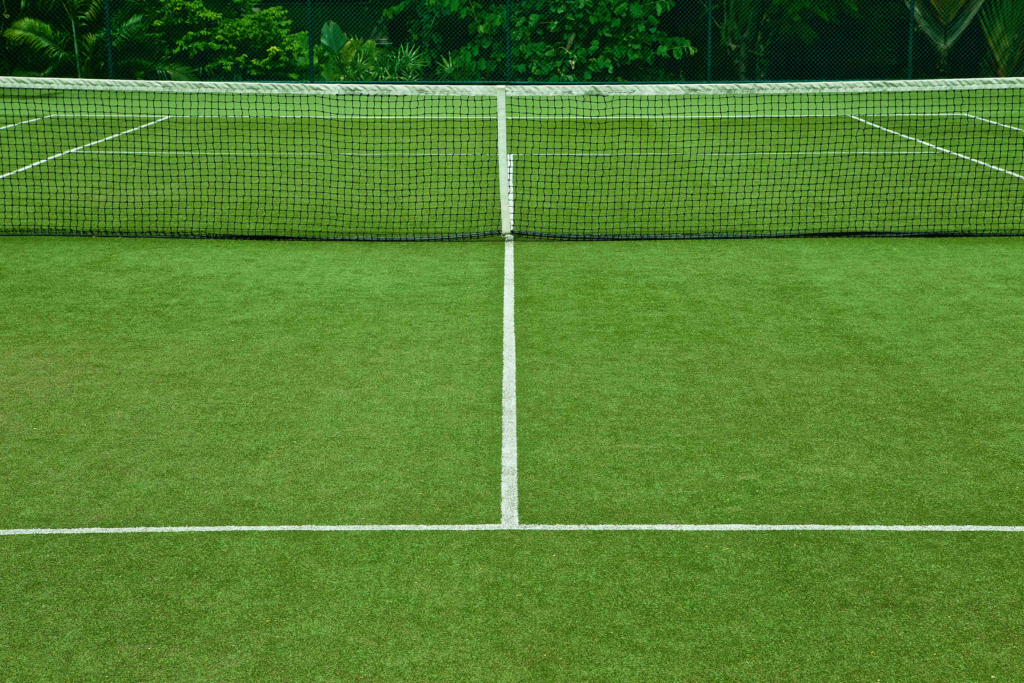
Even the best lawn tennis courts encounter issues over time. The key is early detection and timely repair.
Cracks and Surface Damage
Common on hard courts, cracks usually result from temperature changes or foundation shifts. Small cracks should be filled with specialized crack sealants. Large structural damage may require resurfacing.
Poor Drainage Issues
Standing water indicates improper grading or clogged drains. Solutions include:
- Installing additional drainage channels
- Re-leveling surface slopes
- Cleaning underground pipes
Ignoring drainage issues leads to surface deterioration.
Uneven Grass Growth
On grass courts, worn patches appear in high-traffic areas. Reseeding, fertilizing, and rotating play zones help maintain even coverage.
The lesson? Address minor problems before they become major repairs.
Sustainable and Eco-Friendly Lawn Tennis Court Options
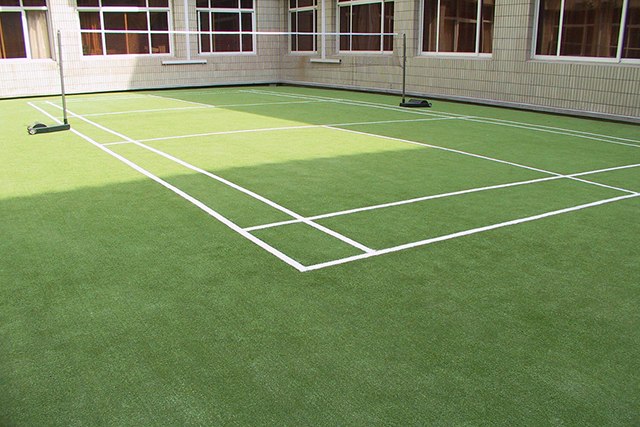
Sustainability is no longer optional—it’s smart planning. Modern lawn tennis courts can be built with eco-conscious strategies.
Water conservation methods include:
- Installing efficient irrigation systems
- Using drought-resistant grass varieties
- Collecting rainwater for maintenance
Eco-friendly materials may involve recycled acrylic coatings or permeable base layers that reduce runoff impact.
Solar-powered lighting systems also reduce long-term energy costs.
Building sustainably doesn’t just help the planet—it reduces operating expenses over time.
Professional vs DIY Lawn Tennis Court Construction
Should you build it yourself or hire professionals? It depends on your expertise and expectations.
DIY may reduce upfront labor costs, but tennis court construction requires precision grading, drainage design, and material layering. Mistakes can cost more in repairs than hiring experts from the start.
Professional contractors bring:
- Engineering expertise
- Specialized equipment
- Compliance with official standards
- Warranty protection
For recreational backyard courts, partial DIY may be possible. For competitive or long-term installations, professional construction is usually the smarter choice.
Safety Guidelines for Lawn Tennis Courts
Safety often gets overlooked—but it shouldn’t. A lawn tennis court must prioritize player protection.
Important guidelines include:
- Maintain non-slip surfaces
- Ensure proper lighting for night play
- Install secure fencing
- Keep surrounding areas clear of obstacles
- Regularly inspect nets and posts
Proper footwear is equally important. Different surfaces require specific tennis shoes for grip and support.
Safety isn’t just about preventing accidents—it enhances confidence during play.
Conclusion
A lawn tennis court is far more than painted lines on a rectangular surface. It’s a carefully engineered environment where athleticism, strategy, and passion meet. From choosing the right surface—grass, clay, hard, or artificial turf—to understanding construction, costs, maintenance, and sustainability, every detail shapes the playing experience.
Building one requires planning and investment. Maintaining one requires consistency and care. But the rewards? Health, connection, recreation, and long-term value.
Whether you’re dreaming of backyard matches with friends or constructing a professional facility, a well-designed lawn tennis court stands as a timeless symbol of sport and dedication.
FAQ’S
What is the standard size of a lawn tennis court?
A lawn tennis court measures 78 feet in length. The width is 27 feet for singles and 36 feet for doubles matches.
Which tennis court surface requires the least maintenance?
Hard courts generally require the least daily maintenance compared to grass and clay courts.
How long does a lawn tennis court last?
With proper maintenance, hard and artificial turf courts can last 15–25 years, while grass and clay courts require more frequent upkeep.
What is the best surface for beginners?
Hard courts are typically ideal for beginners because they offer consistent bounce and moderate speed.
Can a lawn tennis court increase property value?
Yes, especially in luxury markets. A well-maintained court enhances property appeal and recreational value.