
Bangalore is no longer just the Silicon Valley of India—it’s fast becoming a sports infrastructure powerhouse. From residential apartment complexes to elite sports academies, tennis courts are popping up everywhere. And at the heart of every great tennis court? The flooring. Because let’s be honest—no matter how skilled a player is, if the surface isn’t right, the game simply doesn’t feel right.
Tennis court flooring manufacturers in Bangalore are playing a huge role in shaping this sports revolution. They don’t just build courts; they engineer performance. The bounce of the ball, the grip under your shoes, the speed of play—all of it depends on the quality of the surface. A poorly constructed court can lead to injuries, inconsistent gameplay, and costly repairs. On the other hand, a professionally built tennis court offers durability, player safety, and tournament-level performance.
What makes Bangalore unique is its climate. With moderate temperatures but significant rainfall during monsoons, tennis court flooring must withstand both sun exposure and heavy water drainage demands. Manufacturers here understand these local conditions deeply. They design surfaces that resist cracking, fading, and waterlogging.
Whether you’re a school administrator, a real estate developer, or someone planning a private sports facility, choosing the right tennis court flooring manufacturer in Bangalore isn’t just a technical decision—it’s a long-term investment. In this guide, we’ll walk through everything you need to know, from flooring types to cost, maintenance, and how to choose the best manufacturer.
Let’s dive in.
Why Bangalore Is a Growing Hub for Sports Infrastructure
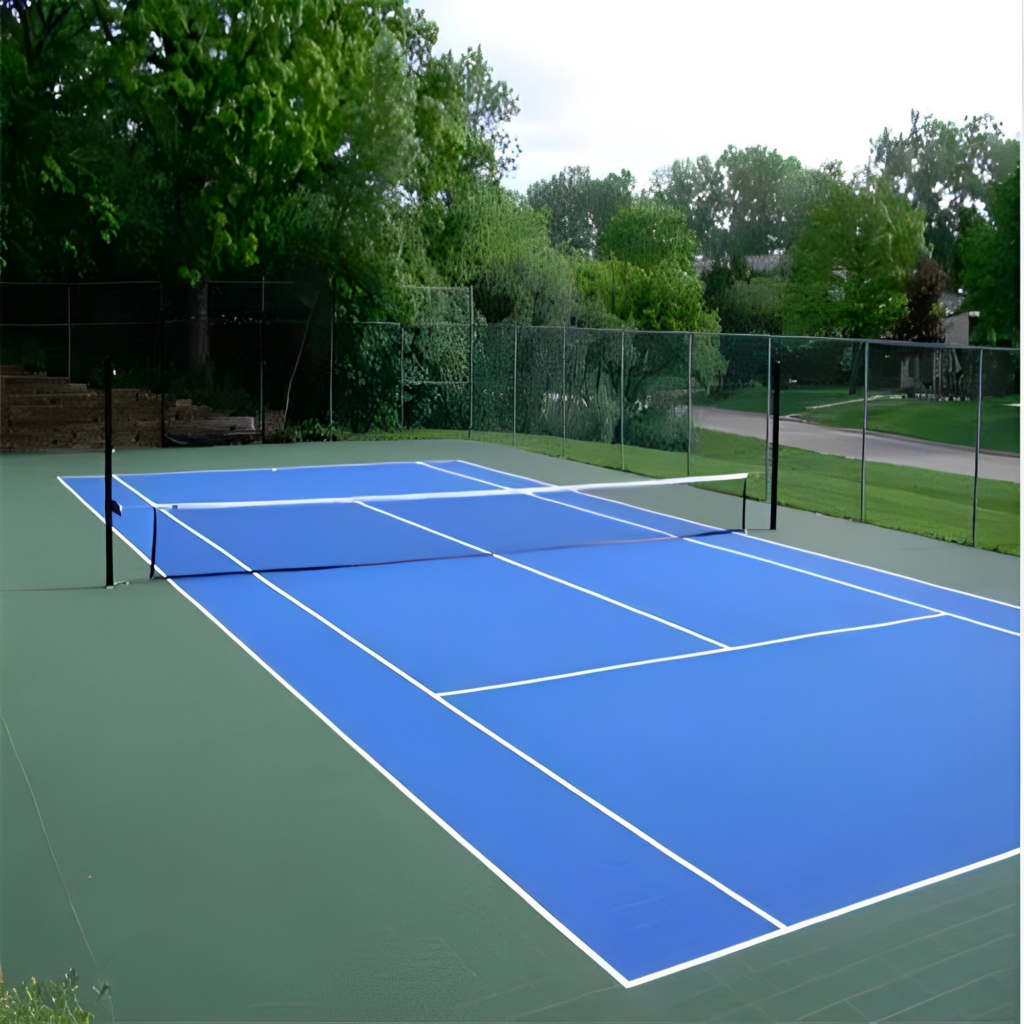
Have you noticed how every premium apartment project in Bangalore now advertises a tennis court? That’s no coincidence. The city’s booming corporate culture, international schools, and rising health awareness have created a surge in demand for professional sports facilities. Tennis, in particular, has seen steady growth.
Bangalore’s population includes a large number of working professionals and expatriates who value recreational amenities. Gated communities compete fiercely to offer lifestyle upgrades, and tennis courts are considered a premium attraction. Schools and colleges are also investing heavily in sports to build competitive programs. Add to that the rise of private tennis academies training state and national-level players, and you have a perfect recipe for increased demand.
But here’s the thing—building a tennis court isn’t as simple as laying down some concrete and painting lines. It requires technical precision, engineering knowledge, and expertise in surface materials. That’s where tennis court flooring manufacturers in Bangalore come in. They bring specialized experience tailored to local soil conditions, weather patterns, and usage requirements.
Another reason Bangalore stands out is access to advanced materials and skilled labor. The city’s strong logistics network ensures quick procurement of synthetic surfaces, acrylic coatings, and base construction materials. Plus, competition among manufacturers has pushed quality standards higher while keeping pricing competitive.
In short, Bangalore isn’t just building tennis courts—it’s building world-class sports infrastructure. And flooring manufacturers are the backbone of this transformation.
Types of Tennis Court Flooring Available in Bangalore
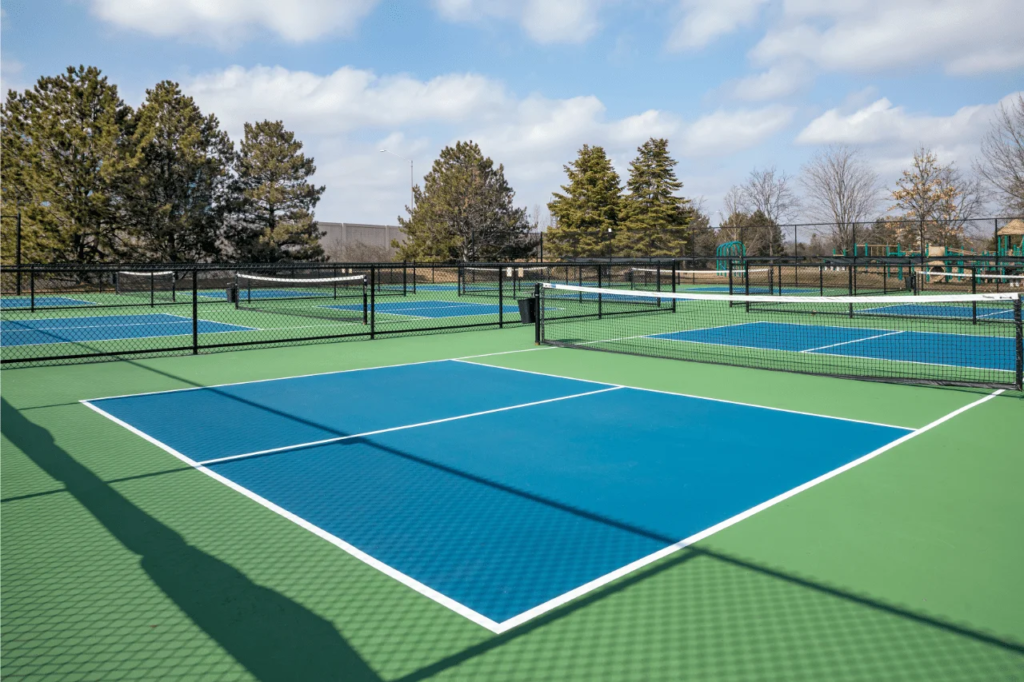
When it comes to tennis court surfaces, one size definitely does not fit all. Different surfaces create different playing experiences. Some are fast, some are slow. Some demand aggressive play, while others favor strategy and endurance. Tennis court flooring manufacturers in Bangalore offer multiple options depending on your needs, budget, and intended use.
Let’s break them down.
Acrylic Tennis Court Flooring
Acrylic tennis court flooring is arguably the most popular choice in Bangalore. Why? Because it offers the perfect balance between performance, durability, and cost-effectiveness. If you’ve ever played on a hard court during professional tournaments like the US Open or Australian Open, you’ve experienced acrylic surfaces.
These courts are typically built on a concrete or asphalt base and coated with multiple layers of acrylic material. The top layer is textured to provide the right grip and ball bounce. One of the biggest advantages of acrylic flooring is its low maintenance requirement. Unlike clay courts, which need daily grooming, acrylic courts require minimal upkeep beyond occasional cleaning and resurfacing every few years.
In Bangalore’s climate, acrylic surfaces perform exceptionally well. They resist UV damage and are designed to handle moderate rainfall without surface deterioration. High-quality manufacturers use anti-skid coatings that enhance player safety while ensuring consistent ball bounce.
Acrylic courts are also customizable. You can choose different color combinations, cushioning systems for shock absorption, and speed variations depending on whether the court is recreational or professional.
For schools, apartments, and sports clubs, acrylic tennis courts are often the go-to solution. They offer long-term value, strong durability, and professional-grade performance—all without breaking the bank.
Synthetic Tennis Court Surfaces
If acrylic courts are the reliable all-rounder, synthetic tennis court surfaces are the premium upgrade. These surfaces often include cushioned layers that reduce impact on players’ joints. Think of them as the luxury sedans of tennis courts—smooth, comfortable, and built for performance.
Synthetic surfaces are typically made from polyurethane or rubberized materials layered over a stable base. The cushioning system underneath absorbs shock, reducing stress on knees and ankles. For academies training young athletes or facilities catering to senior players, this can make a significant difference in preventing injuries.
In Bangalore, synthetic tennis court flooring manufacturers are increasingly offering advanced multi-layer systems that enhance durability while maintaining elasticity. These courts provide consistent ball bounce and can be customized for speed preferences.
Another key advantage is noise reduction. In residential areas, where sound can be a concern, synthetic courts help minimize impact noise. They also offer better water resistance when properly installed with adequate drainage systems.
Of course, premium quality comes at a higher cost. Synthetic tennis courts are generally more expensive than acrylic ones. But for high-end clubs, international schools, and professional training centers, the investment often pays off in player satisfaction and longevity.
Choosing between acrylic and synthetic surfaces ultimately depends on your goals. Are you building for casual play or competitive training? Budget-conscious or performance-focused? The right manufacturer will guide you through this decision carefully.
Clay Tennis Courts
There’s something romantic about clay courts, isn’t there? The slow rallies, the dramatic slides, the red dust rising with every step—it feels almost cinematic. Clay tennis courts have a unique charm, and while they’re less common in Bangalore compared to acrylic surfaces, they still hold a special place in professional training environments.
Clay courts are typically made from crushed brick, shale, or stone layered over a compacted base. The surface is softer and slower than hard courts, which means longer rallies and more strategic gameplay. Players who train on clay often develop stronger endurance and better footwork because the surface demands it. That’s one reason why many professional academies worldwide incorporate clay courts into their facilities.
In Bangalore, however, clay courts require careful planning. The city’s monsoon season can significantly affect the surface if proper drainage systems aren’t installed. Water accumulation can damage the base and make the court unplayable for days. This is why choosing experienced tennis court flooring manufacturers in Bangalore is critical if you’re considering clay. They understand soil stabilization, slope design, and water runoff management.
Maintenance is another major factor. Clay courts need regular watering, rolling, and surface grooming. Lines must be cleaned frequently, and the top layer requires periodic replenishment. While this might sound like a lot of work, some players swear by the experience and performance benefits.
Clay courts are ideal for:
- Professional academies
- Competitive training centers
- Players preparing for clay tournaments
- Facilities that prioritize traditional tennis experience
They may not be the most low-maintenance option, but when built correctly by skilled manufacturers, clay courts offer unmatched playability and character.
Artificial Grass Tennis Courts
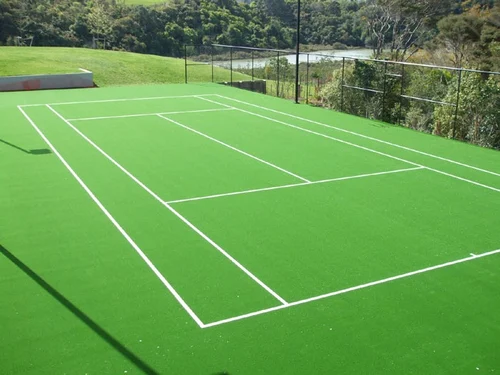
Artificial grass tennis courts are gaining popularity in Bangalore, especially in residential communities and schools. Why? Because they strike a balance between comfort, affordability, and ease of maintenance. Imagine the look of natural grass without the constant mowing and watering—that’s the appeal.
Artificial grass courts are made using synthetic turf with sand infill to stabilize the surface. The sand helps control ball speed and provides grip for players. Compared to natural grass, these courts are far more durable and weather-resistant.
In Bangalore’s climate, artificial grass performs quite well when installed properly. High-quality tennis court flooring manufacturers ensure that the base is leveled and equipped with proper drainage layers to prevent water stagnation during heavy rains. Without this, the surface can become uneven or slippery over time.
One of the biggest advantages of artificial grass is comfort. The surface is softer underfoot, reducing strain on joints. It’s particularly suitable for recreational players and communities where the court will be used by people of varying skill levels.
Maintenance requirements are minimal:
- Occasional brushing to redistribute sand
- Cleaning debris
- Periodic inspection of seams and edges
However, artificial grass courts may not offer the same professional-level bounce consistency as acrylic or synthetic surfaces. They’re better suited for leisure and moderate play rather than high-intensity tournament training.
For apartment complexes, schools, and clubs looking for a cost-effective and visually appealing option, artificial grass is a practical choice—especially when installed by experienced tennis court flooring manufacturers in Bangalore.
Key Features to Look for in Tennis Court Flooring Manufacturers
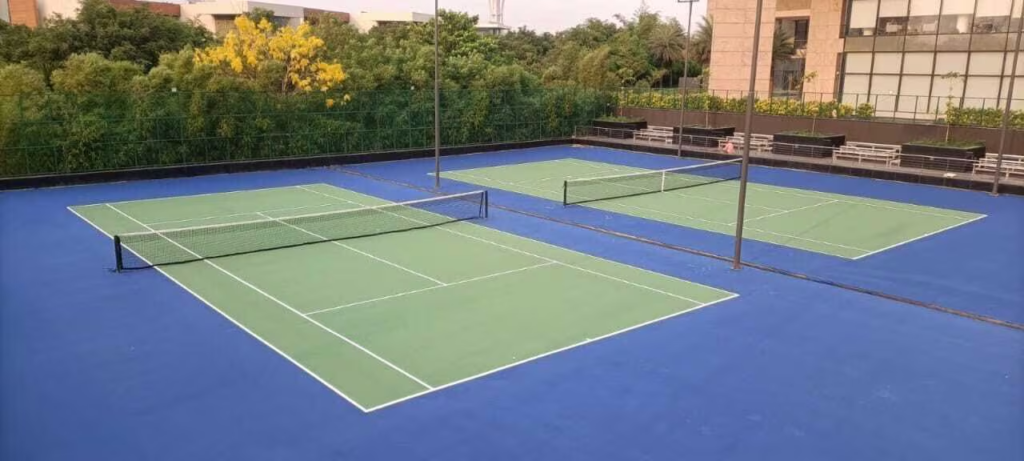
Choosing the right tennis court flooring manufacturer isn’t just about comparing prices. It’s about expertise, reliability, and long-term value. A poorly executed court can cost you more in repairs than you saved upfront. So what should you look for?
First, check their experience. How many courts have they completed in Bangalore? Local experience matters because soil conditions, rainfall patterns, and temperature fluctuations directly affect installation quality.
Second, evaluate the materials they use. High-grade acrylic coatings, quality synthetic layers, and proper base construction materials make all the difference. Don’t hesitate to ask about brands and specifications.
Third, review their installation process. A professional manufacturer should provide:
- Site inspection and soil testing
- Proper base preparation
- Drainage planning
- Multi-layer surface application
- Quality testing before handover
Another important factor is customization. Can they tailor the court speed? Offer cushioned layers? Provide color options? The best tennis court flooring manufacturers in Bangalore offer flexibility based on your needs.
Lastly, check their after-sales support. Do they offer maintenance services? Warranty coverage? Regular inspections? A good manufacturer doesn’t disappear after installation—they stay involved.
Think of it like building a house. You wouldn’t hire a contractor without checking credentials, right? The same logic applies here.
Top Benefits of Hiring Professional Tennis Court Flooring Manufacturers in Bangalore
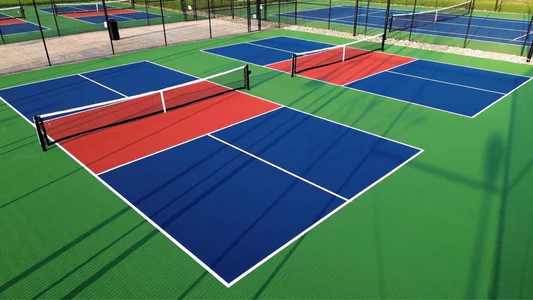
You might wonder—can’t any contractor build a tennis court? Technically, yes. But should they? Absolutely not.
Professional tennis court flooring manufacturers bring specialized knowledge that general contractors often lack. Tennis courts require precision in slope (usually about 1%), surface layering, and bounce calibration. Even a slight error can affect gameplay.
Here are the major benefits of hiring professionals:
- Accurate Surface Engineering: Ensures consistent ball bounce.
- Proper Drainage Systems: Prevents water accumulation.
- High-Quality Materials: Enhances durability.
- Compliance with Standards: Meets international specifications.
- Long-Term Cost Savings: Reduces repair frequency.
Professionals also use advanced equipment for leveling and coating application. They understand curing times, weather conditions during installation, and material compatibility.
In Bangalore’s competitive market, reputable manufacturers focus on quality because word-of-mouth matters. One poorly constructed court can damage their reputation.
Simply put, investing in professional tennis court flooring manufacturers ensures your court isn’t just built—it’s built right.
Step-by-Step Tennis Court Construction Process
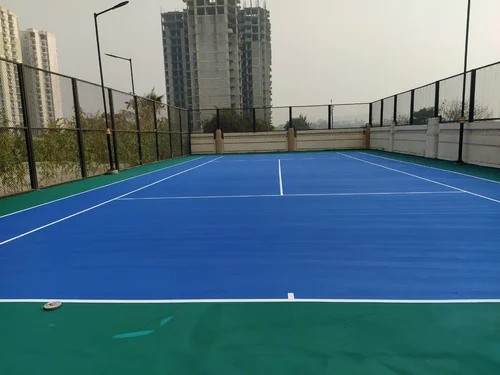
Ever wondered what goes into building a tennis court from scratch? It’s not magic—it’s a methodical, layered process.
Here’s a simplified breakdown:
1. Site Preparation
The area is cleared, leveled, and compacted. Soil stability is tested to prevent future cracks.
2. Base Construction
A strong base of concrete or asphalt is laid. This is the foundation of the entire court.
3. Slope and Drainage Design
The surface is slightly sloped to allow water runoff.
4. Surface Layer Application
Multiple layers of acrylic, synthetic, clay, or grass are applied depending on the chosen type.
5. Line Marking
Precise measurements ensure accurate court dimensions.
6. Final Inspection
Bounce tests and surface checks are conducted before handover.
In Bangalore, experienced manufacturers carefully time installations to avoid heavy monsoon disruptions. Weather awareness plays a critical role in ensuring durability.
Building a tennis court is like baking a layered cake—miss one layer, and the whole structure suffers.
Cost of Tennis Court Flooring in Bangalore
Let’s talk about the big question that’s probably sitting in the back of your mind—how much does it actually cost to build a tennis court in Bangalore? The honest answer? It depends. And no, that’s not a vague escape. The cost of tennis court flooring varies based on surface type, site conditions, customization, and the reputation of the manufacturer you choose.
On average, the price range in Bangalore can look something like this:
| Surface Type | Approximate Cost (INR) |
|---|---|
| Acrylic Court | ₹6 lakh – ₹12 lakh |
| Synthetic Cushioned Court | ₹10 lakh – ₹18 lakh |
| Clay Court | ₹8 lakh – ₹15 lakh |
| Artificial Grass Court | ₹7 lakh – ₹14 lakh |
These numbers can shift depending on site preparation. For example, if the soil requires heavy stabilization or additional drainage work, costs increase. Similarly, indoor courts require different structural planning, which adds to the investment.
Here’s what typically affects pricing:
- Base construction quality
- Surface material brand and thickness
- Cushion layers (if included)
- Fencing and lighting systems
- Drainage systems
- Labor expertise
Many tennis court flooring manufacturers in Bangalore offer turnkey solutions that include fencing, lighting poles, and even spectator seating. While this may seem more expensive upfront, it often turns out more economical than hiring multiple vendors separately.
It’s also important to think long term. A cheaper court with substandard materials might require resurfacing in 2–3 years. A professionally built court, however, can last 7–10 years with proper maintenance. That’s the difference between an expense and an investment.
When evaluating quotes, don’t just compare numbers. Compare specifications. Ask what’s included. Ask about warranties. The goal isn’t to spend less—it’s to spend wisely.
Indoor vs Outdoor Tennis Court Flooring Options
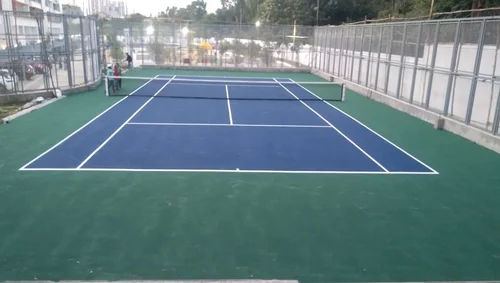
Choosing between an indoor and outdoor tennis court in Bangalore is like deciding between driving a convertible or a luxury sedan. Both are great—it just depends on your needs.
Outdoor Tennis Courts
Outdoor courts are the most common choice. Bangalore’s relatively moderate climate makes outdoor play feasible for most of the year. Acrylic and synthetic surfaces dominate this category.
Advantages of outdoor courts:
- Lower construction cost compared to indoor setups
- Natural lighting reduces electricity expenses
- Ideal for residential complexes and schools
However, monsoon season is a factor. Proper drainage becomes absolutely critical. Without it, water stagnation can damage the base and surface layers. This is why experienced tennis court flooring manufacturers in Bangalore emphasize slope accuracy and water runoff systems.
Indoor Tennis Courts
Indoor courts, on the other hand, provide all-weather playability. Rain or shine, the game goes on. These are popular among premium sports academies and elite clubs.
Advantages of indoor courts:
- Protection from rain and UV exposure
- Controlled playing environment
- Longer surface lifespan
The trade-off? Higher construction and maintenance costs due to roofing structures, ventilation systems, and lighting requirements.
If your facility aims for professional training and year-round usage, indoor courts may justify the investment. But for most residential and school projects in Bangalore, outdoor courts remain the practical and cost-effective option.
Maintenance Requirements for Different Tennis Court Surfaces
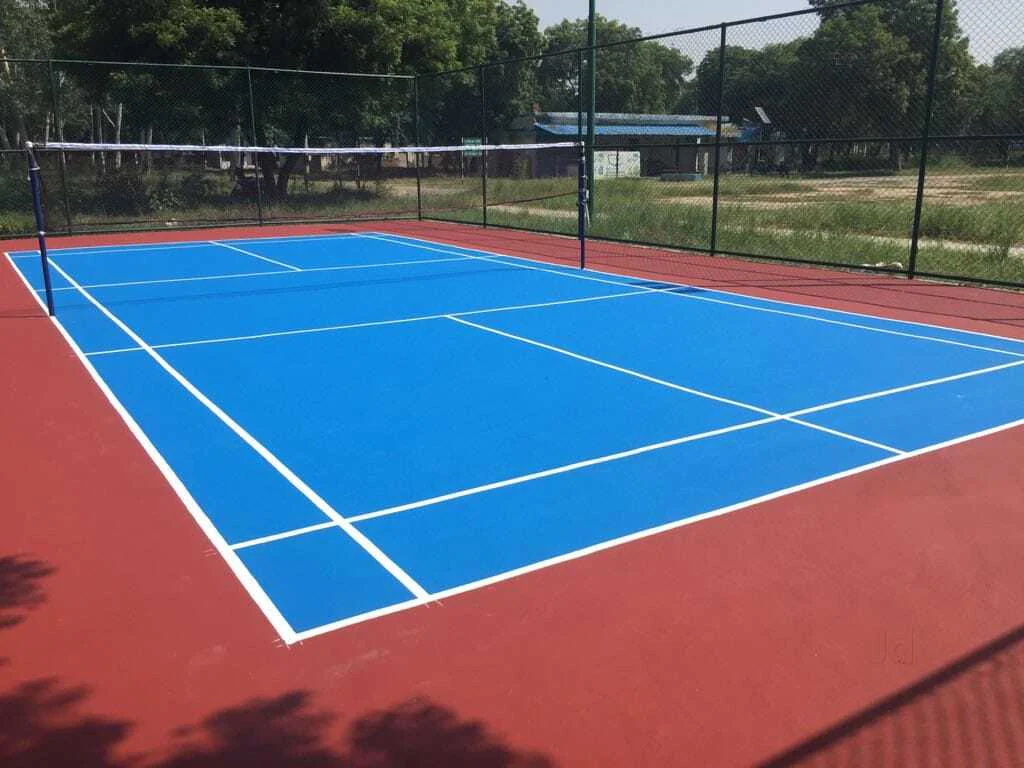
Here’s the truth—no tennis court is truly “maintenance-free.” But some require more care than others. And if you neglect maintenance, even the best-built court can deteriorate quickly.
Let’s break it down:
Acrylic Courts
- Sweep regularly to remove dust and debris
- Pressure wash occasionally
- Resurface every 5–7 years
Acrylic courts are relatively low maintenance, which is one reason they’re so popular in Bangalore.
Synthetic Cushioned Courts
- Clean surface frequently
- Inspect cushioning layers periodically
- Avoid heavy equipment that may damage elasticity
These courts require slightly more attention but reward you with player comfort.
Clay Courts
- Daily watering
- Regular rolling
- Line cleaning
- Seasonal resurfacing
Clay courts demand commitment. They’re like a high-maintenance garden—beautiful but demanding.
Artificial Grass Courts
- Brush surface to redistribute sand
- Remove debris
- Inspect seams
Most reputable tennis court flooring manufacturers in Bangalore offer annual maintenance contracts. This ensures minor issues are fixed before they turn into expensive repairs.
Maintenance isn’t just about aesthetics. It’s about player safety, bounce consistency, and long-term durability. A well-maintained court feels inviting. A neglected one? Not so much.
How to Choose the Best Tennis Court Flooring Manufacturer in Bangalore
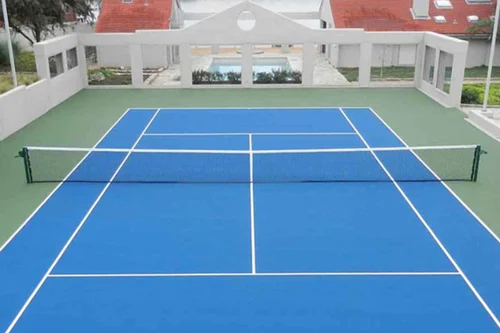
With so many options in Bangalore, how do you pick the right manufacturer? It’s easy to get overwhelmed. Everyone claims to be the best. So how do you separate marketing talk from actual expertise?
Start with research. Look at their portfolio. Have they completed projects for schools, clubs, or residential complexes? Visit at least one of their completed courts if possible. Nothing beats seeing the surface in action.
Next, check reviews and client testimonials. A reputable tennis court flooring manufacturer will have positive feedback and repeat clients.
Ask these critical questions:
- What materials do you use?
- How do you handle drainage?
- What warranty do you provide?
- How long will the project take?
- Do you offer maintenance services?
Transparency is key. A professional manufacturer will clearly explain the construction process, timeline, and cost breakdown.
Also, don’t automatically choose the lowest quote. Sometimes lower pricing means thinner surface layers or compromised base construction.
In Bangalore’s competitive market, quality manufacturers stand out because they prioritize durability, compliance with standards, and long-term customer satisfaction.
Choosing the right partner isn’t just about building a court—it’s about building trust.
Certifications and Standards to Check Before Hiring
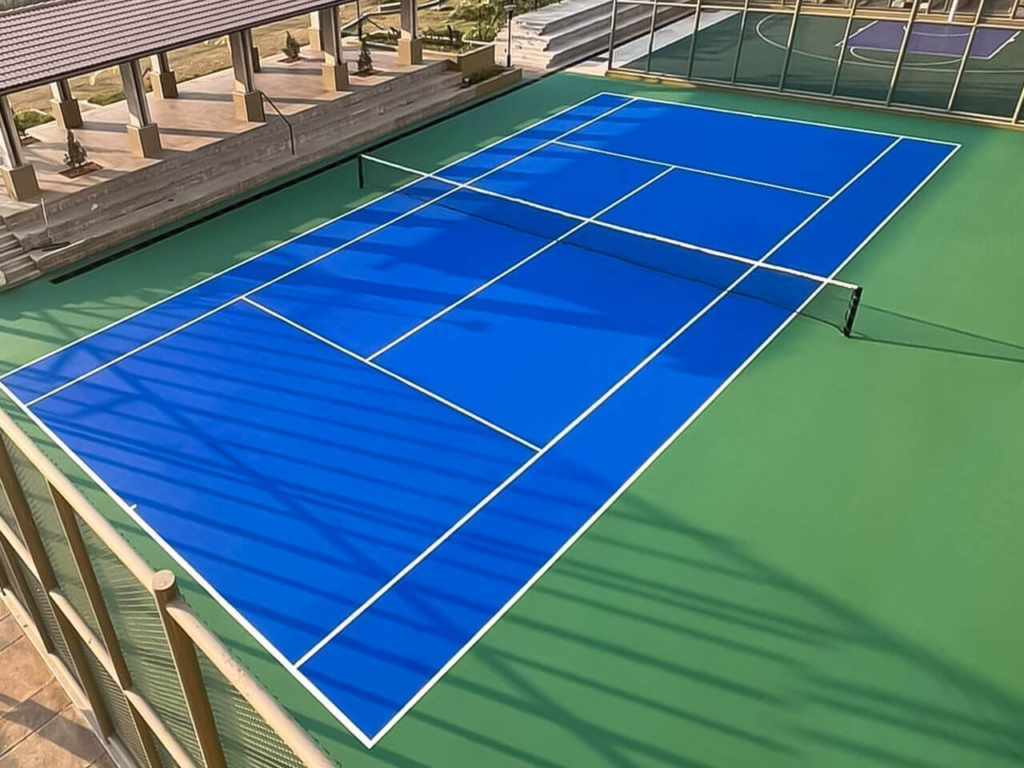
Tennis courts aren’t just recreational spaces; they’re precision-built sports surfaces. That’s why certifications and standards matter.
Look for compliance with international bodies like:
- ITF (International Tennis Federation)
- AITA (All India Tennis Association)
- ISO-certified material suppliers
Professional tennis court flooring manufacturers in Bangalore often use ITF-approved surface systems, especially for tournament-level courts.
Certifications ensure:
- Accurate court dimensions
- Proper surface speed rating
- Consistent bounce quality
- Safe traction levels
Without these standards, you risk building a court that doesn’t meet professional requirements.
If you’re constructing a court for competitions or academy training, certifications aren’t optional—they’re essential.
Eco-Friendly and Sustainable Tennis Court Flooring Solutions
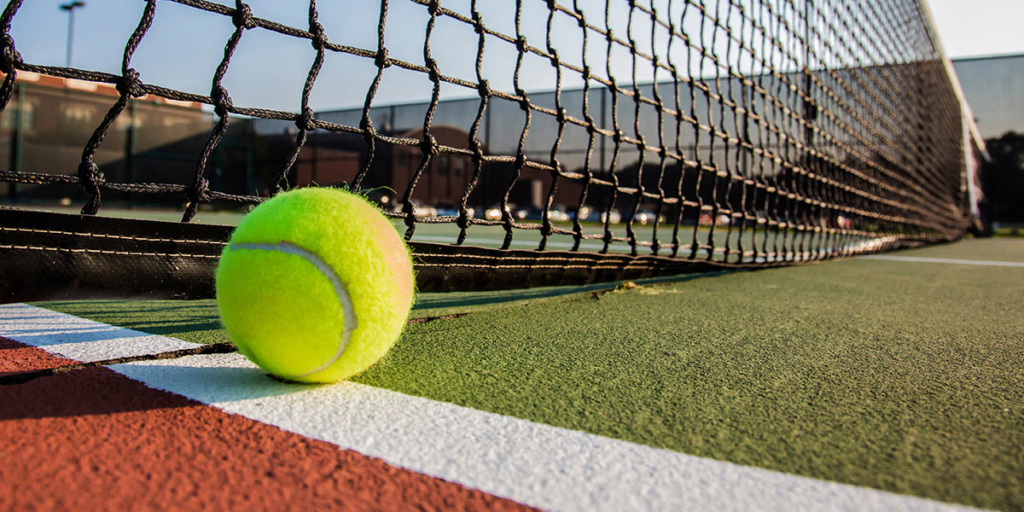
Sustainability isn’t just a trend—it’s a responsibility. Bangalore, being a forward-thinking city, is increasingly adopting eco-friendly construction practices.
Some manufacturers now offer:
- Water-based acrylic coatings
- Recycled rubber cushioning layers
- Permeable base systems for better water absorption
- Energy-efficient LED lighting solutions
Eco-friendly tennis court flooring reduces environmental impact while maintaining performance quality.
Additionally, proper drainage systems prevent water wastage by channeling runoff effectively. Some facilities even incorporate rainwater harvesting alongside court construction.
If sustainability matters to your organization or residential community, discuss green options with your chosen tennis court flooring manufacturer.
Small changes can make a big difference.
Common Mistakes to Avoid When Installing Tennis Court Flooring
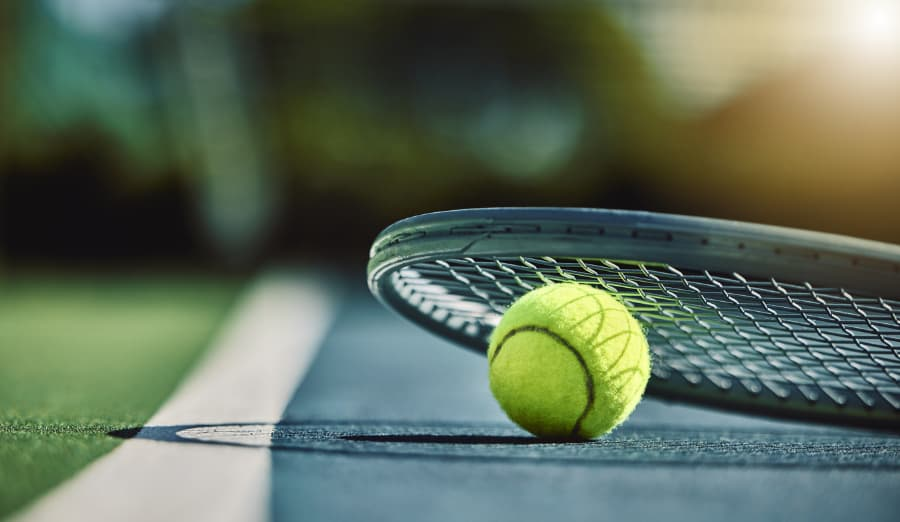
Mistakes during installation can be costly—and sometimes irreversible.
Avoid these common errors:
- Skipping soil testing
- Ignoring drainage planning
- Choosing low-quality materials
- Rushing the curing process
- Hiring inexperienced contractors
In Bangalore’s climate, poor drainage is the number one culprit behind premature surface damage.
Think of your tennis court like a foundation for performance. If the base is weak, everything above it suffers.
Future Trends in Tennis Court Flooring Technology
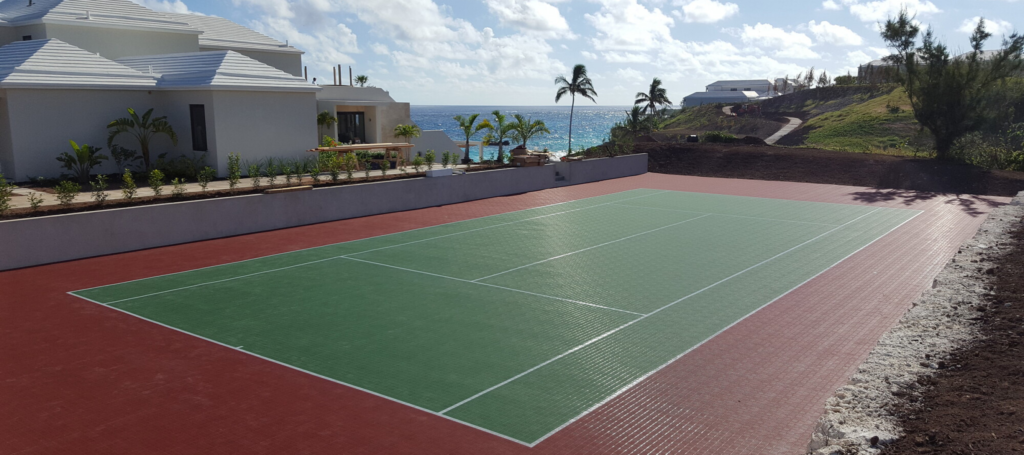
Technology is reshaping even traditional sports infrastructure. Tennis court flooring manufacturers in Bangalore are beginning to adopt advanced innovations.
Emerging trends include:
- Smart shock-absorption systems
- Enhanced UV-resistant coatings
- Modular court systems
- Improved anti-skid textures
- Hybrid surfaces combining speed and comfort
As player expectations rise, surface technology continues to evolve. The future of tennis flooring is not just about durability—it’s about performance optimization and injury prevention.
Why Bangalore Schools, Clubs, and Apartments Are Investing in Tennis Courts
There’s a simple reason—value. Tennis courts add both lifestyle appeal and property value.
For schools, they enhance sports programs.
For clubs, they attract memberships.
For apartments, they boost resale potential.
In a competitive real estate market like Bangalore, premium amenities make all the difference.
Tennis courts aren’t just recreational spaces—they’re community builders.
Conclusion
Tennis court flooring manufacturers in Bangalore are shaping the city’s growing sports landscape. From acrylic and synthetic surfaces to clay and artificial grass, the options are diverse and adaptable to different budgets and performance needs.
Choosing the right manufacturer means focusing on quality materials, proper drainage, certifications, and long-term support. Whether you’re building for recreation, training, or professional competition, the right surface can elevate the entire playing experience.
A tennis court isn’t just concrete and coating—it’s where rallies are fought, skills are sharpened, and champions are made. Invest wisely, and you’ll build something that lasts for years.