
Tennis is one of the fastest-growing sports in educational institutions across India. Tennis Court Flooring for Schools has become a key focus as schools and sports academies increasingly invest in professional tennis courts to support physical education, competitive training, and long-term talent development. However, the success of any tennis facility begins with choosing the right tennis court flooring.
This guide explains everything schools and academies need to know about tennis court flooring for schools, including surface types, performance benefits, safety considerations, costs, maintenance requirements, and best practices—helping institutions make a smart, durable, and long-term investment in sports infrastructure.
Why Tennis Court Flooring Matters in Schools & Academies
Unlike recreational courts, tennis courts in schools and academies face:
- Daily student usage
- Training sessions with repetitive movements
- Long playing hours
- Varied skill levels (beginners to competitive players)
Poor-quality flooring can lead to injuries, uneven ball bounce, high maintenance costs, and reduced court life.
The right tennis court surface ensures:
✔ Player safety
✔ Consistent performance
✔ Reduced injury risk
✔ Long-term durability
✔ Better training outcomes
Key Requirements for School & Academy Tennis Courts
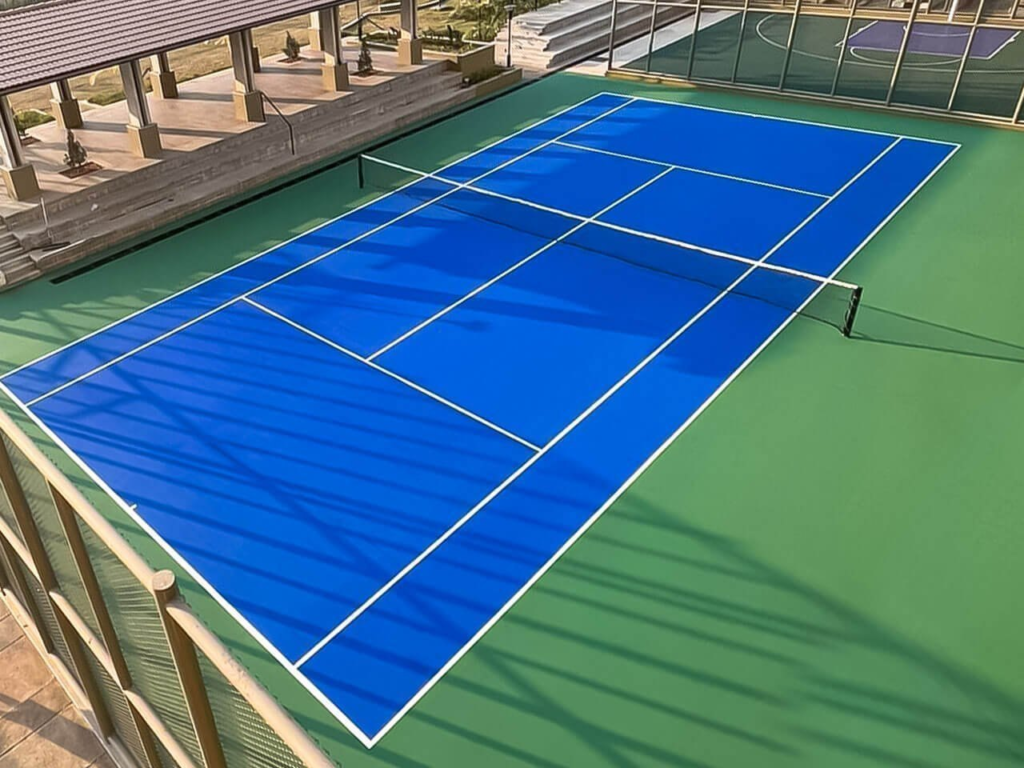
A tennis court designed for educational institutions must meet specific functional needs:
1. Player Safety
Young players require surfaces that reduce impact stress on knees, ankles, and joints.
2. Consistent Ball Bounce
Training quality depends on predictable bounce and surface response.
3. Weather Resistance
Outdoor courts must withstand sun, rain, and temperature variations.
4. Low Maintenance
Schools and academies need surfaces that are economical to maintain.
5. Long Service Life
A one-time investment should deliver performance for many years.
Best Types of Tennis Court Flooring for Schools & Academies
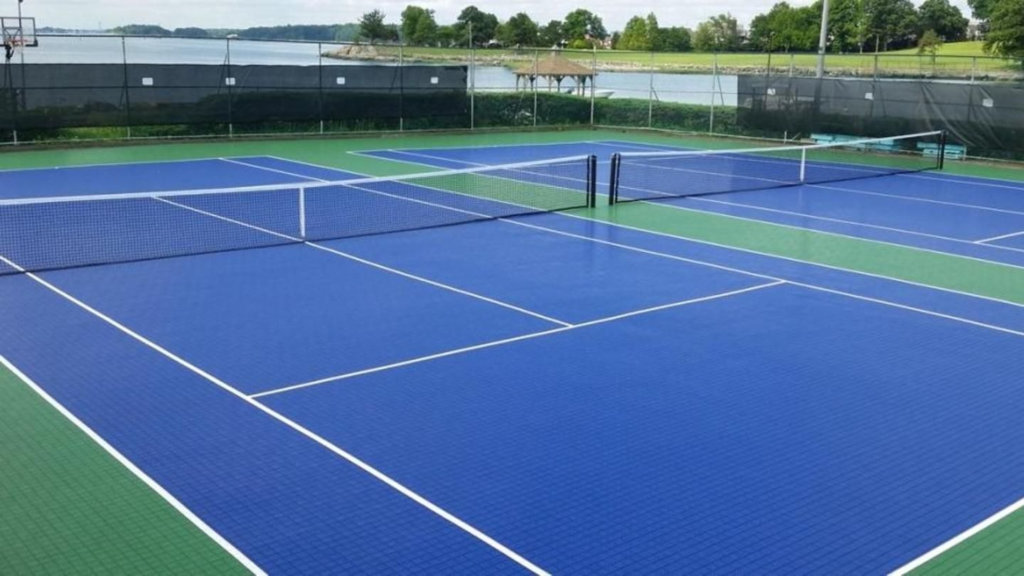
1. Synthetic Acrylic Tennis Court Flooring (Most Recommended)
Synthetic acrylic flooring is the most widely used tennis court surface for schools and academies in India.
Key Benefits:
- Excellent grip and traction
- Consistent ball bounce
- UV and weather resistant
- Low maintenance
- Suitable for all age groups
Why It’s Ideal for Schools & Academies:
- Customisable cushioning layers for junior players
- Long-lasting performance under heavy use
- Cost-effective over time
Lifespan: 8–12 years with proper maintenance
2. Synthetic Grass Tennis Courts
Synthetic grass courts are sometimes used in schools for recreational tennis.
Pros:
- Softer surface
- Lower installation cost
- Comfortable for beginners
Cons:
- Inconsistent ball bounce
- Higher maintenance over time
- Not ideal for professional training
Best suited for basic school-level play, not competitive academies.
3. Clay Tennis Courts
Clay courts offer slow-paced gameplay and are popular internationally, but they pose challenges in school environments.
Limitations:
- High daily maintenance
- Watering and rolling required
- Not suitable for heavy monsoon regions
Clay courts are rarely practical for Indian schools due to upkeep demands.
4. Concrete Courts with Paint (Not Recommended)
Concrete-only courts are still common but outdated.
Drawbacks:
- Hard surface causes joint stress
- Cracking over time
- Slippery when wet
- Poor shock absorption
They may be budget-friendly initially but are costly in the long run.
Why Synthetic Acrylic Flooring Is the Best Choice
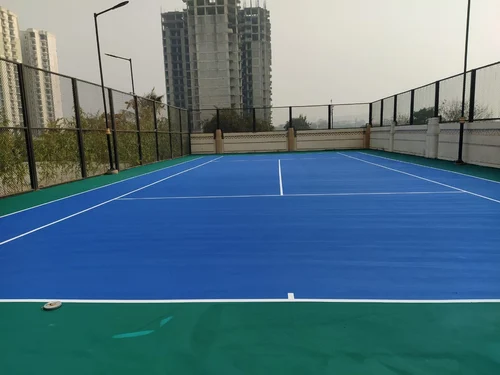
For schools and academies, synthetic acrylic tennis courts provide the perfect balance between performance, safety, and affordability.
Performance Advantages
- ITF-compliant surface options
- Uniform texture for fair play
- Controlled pace suitable for training
Safety Benefits
- Cushioned systems reduce injury risk
- Non-slip textured finish
- Ideal for children and young athletes
Climate Suitability
- Performs well in extreme heat
- Withstands monsoon rainfall
- UV-stable colours prevent fading
Indoor vs Outdoor Tennis Court Flooring
Outdoor Tennis Courts
Most schools prefer outdoor courts due to space availability.
Best flooring:
✔ Synthetic acrylic systems
✔ Weather-resistant coatings
✔ Anti-slip textures
Indoor Tennis Courts
Used by elite academies and international schools.
Best flooring:
✔ Cushioned acrylic systems
✔ Controlled lighting environments
✔ Dust-free surfaces
Tennis Court Flooring Installation Process
A professional tennis court flooring system involves:
- Base Preparation
- Asphalt or concrete foundation
- Proper slope for drainage
- Crack Filling & Surface Leveling
- Primer Application
- Acrylic Base Coats
- Textured layers for grip
- Cushion Layers (Optional)
- Final Acrylic Colour Coats
- Line Marking as per Standards
Proper installation ensures durability, safety, and warranty validity.
Maintenance of Tennis Courts in Schools & Academies
One of the biggest advantages of acrylic tennis courts is easy upkeep.
Routine Maintenance Includes:
- Regular sweeping
- Occasional water washing
- Avoiding sharp equipment
- Periodic inspection
Recoating Cycle: Every 3–5 years for optimal performance
Cost of Tennis Court Flooring for Schools & Academies
Costs depend on:
- Court size
- Surface type
- Cushion layers
- Base condition
- Location
Synthetic acrylic courts offer the best value, with moderate installation costs and minimal recurring expenses.
Common Mistakes Schools Should Avoid
- Choosing flooring based on cost alone
- Ignoring base quality
- Hiring inexperienced installers
- Skipping cushioning for junior players
- Delaying maintenance
Avoiding these mistakes ensures longer court life and safer play.
Who Should Invest in Professional Tennis Court Flooring?
- Schools with structured sports programs
- Tennis academies and coaching centers
- International schools
- Sports training institutes
- Residential school campuses
Future of Tennis Infrastructure in Education
With increasing emphasis on sports education and fitness, high-quality tennis courts are becoming essential infrastructure in schools and academies. Investing in the right flooring today supports player development, safety, and competitive excellence for years to come.
International Standards for School & Academy Tennis Courts
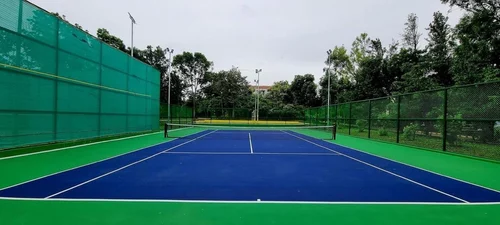
For schools and academies aiming to offer professional-grade training, aligning tennis courts with international standards is essential.
Court Dimensions
- Length: 23.77 meters
- Width (Doubles): 10.97 meters
- Width (Singles): 8.23 meters
- Recommended Run-Off Area: Minimum 3.65 meters behind baselines
Proper spacing ensures safe movement and uninterrupted play during training sessions.
Surface Compliance
Synthetic acrylic tennis courts can be designed to meet ITF (International Tennis Federation) pace ratings, making them suitable for competitive training and tournaments.
Importance of Cushion Systems for Young Players
Schools and academies primarily cater to children and teenagers whose joints and muscles are still developing. Adding cushion layers beneath acrylic flooring significantly enhances safety.
Benefits of Cushioned Acrylic Systems
- Reduced impact stress on knees and ankles
- Lower risk of long-term injuries
- Improved comfort during extended practice sessions
- Enhanced shock absorption without affecting ball bounce
Cushioned tennis courts are highly recommended for institutions with high daily usage.
Role of Surface Pace in Player Development
Surface pace plays a crucial role in shaping a player’s skills.
Medium-Pace Acrylic Courts
Most schools and academies prefer medium-pace courts because they:
- Encourage longer rallies
- Improve player endurance
- Help students develop balanced footwork and stroke control
This makes acrylic flooring ideal for training environments focused on overall player development rather than just speed.
Drainage & Water Management for Outdoor Tennis Courts
In regions with heavy rainfall, especially during monsoons, proper drainage is non-negotiable.
How Acrylic Tennis Courts Handle Water
- Slight surface slope ensures fast runoff
- Seamless coating prevents water seepage
- Quick-drying surface allows play soon after rain
This ensures minimal downtime and consistent training schedules.
Lighting Compatibility with Tennis Court Flooring
For schools conducting evening practice sessions, lighting plays a key role.
Why Acrylic Flooring Works Well with LED Lighting
- Non-glare surface improves visibility
- Even colour distribution enhances line clarity
- Suitable for both natural and artificial lighting
This combination ensures better gameplay and safer training conditions.
Tennis Court Flooring for Different Age Groups
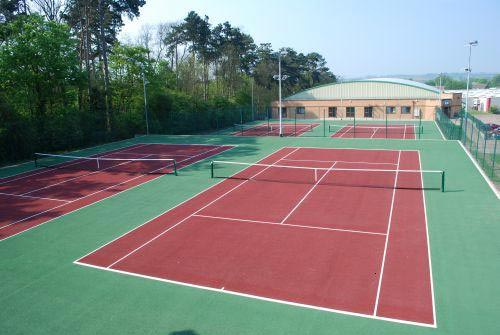
Primary School Students
- Extra cushioning recommended
- Softer texture for safety
- Bright colours for visibility
Middle & High School Students
- Standard acrylic systems
- Medium texture for controlled grip
- ITF-style line markings
Advanced Academy Players
- Performance-oriented acrylic systems
- Custom surface pace
- Tournament-grade finish
Environmental & Sustainability Considerations
Modern tennis court flooring systems are designed with sustainability in mind.
Eco-Friendly Advantages
- Low VOC acrylic coatings
- Reduced water usage compared to clay courts
- Long lifecycle reduces material waste
For schools focusing on green infrastructure, acrylic courts align well with sustainability goals.
Signs Your Tennis Court Needs Recoating or Repair
Regular inspection helps extend court life.
Common Warning Signs
- Surface fading
- Reduced grip
- Minor cracks appearing
- Uneven ball bounce
Timely recoating restores performance and prevents costly repairs.
Choosing the Right Tennis Court Flooring Partner
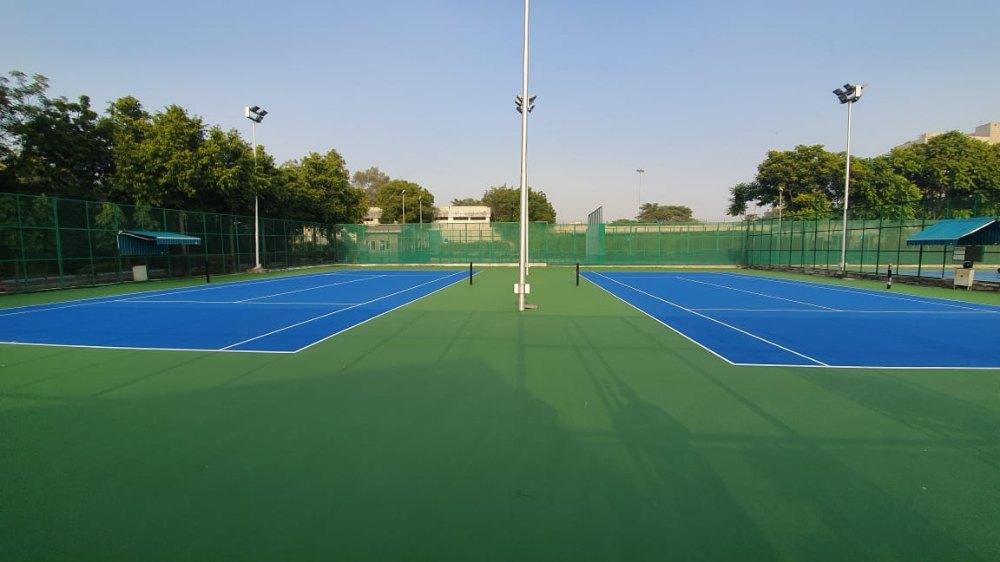
Selecting an experienced contractor is just as important as choosing the material.
What Schools Should Look For
- Proven experience in educational projects
- Knowledge of sports standards
- Quality-certified materials
- After-installation support
A professional partner ensures safety, performance, and long-term reliability.
Long-Term Value for Educational Institutions
Investing in quality tennis court flooring is not just about sports—it contributes to:
- Student fitness and well-being
- Institutional reputation
- Talent development programs
- Increased campus infrastructure value
A well-built tennis court becomes a long-term asset for the institution.
Final Thoughts
Tennis court flooring for schools and academies must balance performance, safety, durability, and cost-effectiveness. With its adaptability, low maintenance, and professional-grade performance, synthetic acrylic tennis court flooring remains the top choice for educational institutions.
By choosing the right surface and installation approach, schools and academies can create an environment that nurtures young talent while ensuring safety and long-lasting value.
FAQ’s
What is the best tennis court flooring for schools and academies?
Synthetic acrylic tennis court flooring is the best choice for schools and academies. It offers excellent player safety, consistent ball bounce, weather resistance, and low maintenance, making it ideal for daily student use and professional training.
Is synthetic acrylic flooring safe for children?
Yes. Acrylic tennis court flooring can be installed with cushioned layers that reduce joint impact and minimize the risk of injuries, making it safe for children and young athletes.
Can acrylic tennis courts be used in all weather conditions?
Yes. Synthetic acrylic courts are designed to withstand extreme heat, heavy rainfall, and UV exposure, making them suitable for outdoor use across different climatic regions.
How long does tennis court flooring last in schools?
With proper installation and routine maintenance, synthetic acrylic tennis court flooring can last 8 to 12 years or more, even under heavy daily usage.
Is acrylic tennis court flooring suitable for professional training?
Yes. Acrylic surfaces can be designed to meet international standards and provide controlled surface pace, making them ideal for both beginner training and advanced academy-level coaching.