
A synthetic tennis court is one of the most popular choices for modern sports infrastructure due to its durability, low maintenance, and consistent playing performance. From schools and academies to professional clubs and residential societies, synthetic courts are widely used for both indoor and outdoor tennis facilities.
This complete guide covers everything you need to know about synthetic tennis court flooring, construction process, dimensions, cost in India, advantages, and maintenance tips.
Table of Contents
What Is a Synthetic Tennis Court?
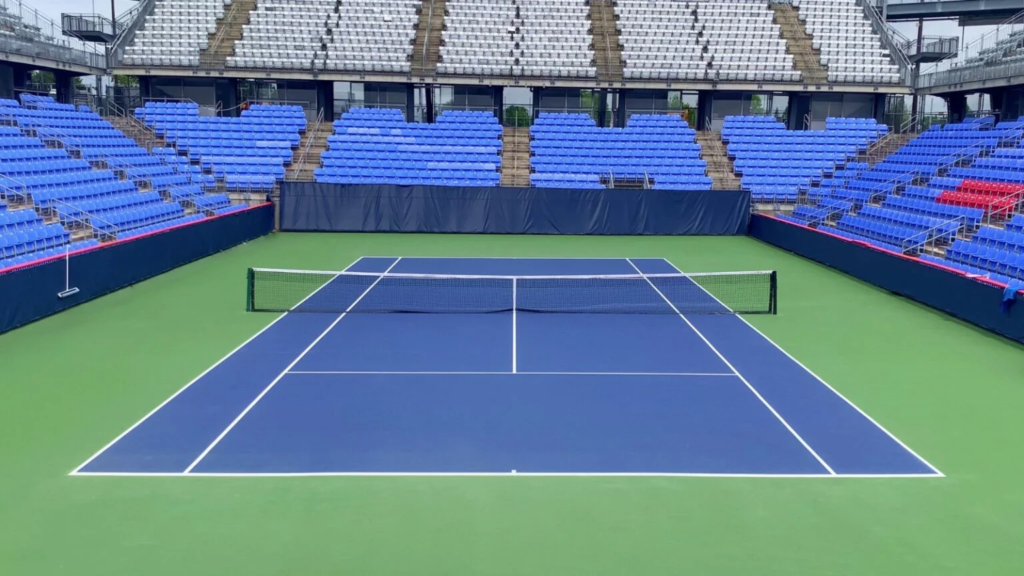
A synthetic tennis court is a court surfaced with man-made materials such as acrylic, PU, or synthetic turf instead of natural grass or clay. These courts are designed to offer:
- Uniform ball bounce
- Better grip
- Weather resistance
- Long-term durability
Synthetic surfaces comply with ITF (International Tennis Federation) standards and are suitable for professional play.
Standard Tennis Court Dimensions (Synthetic Courts)
Singles Court Dimensions
- Length: 23.77 meters
- Width: 8.23 meters
Doubles Court Dimensions
- Length: 23.77 meters
- Width: 10.97 meters
Total Area Required (Including Run-Off)
- Minimum Area: 36.6 × 18.3 meters
Proper dimensions are critical to ensure ITF compliance and smooth gameplay.
Types of Synthetic Tennis Court Flooring
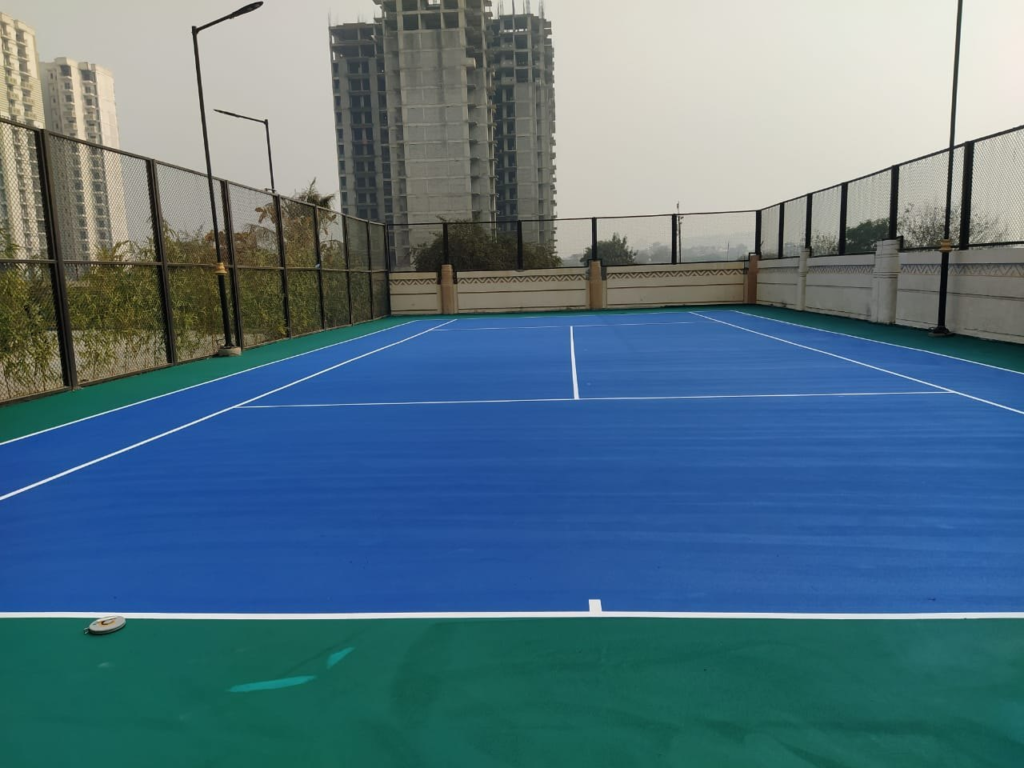
Choosing the right flooring depends on usage, location, and budget.
1. Acrylic Tennis Court Flooring (Most Popular)
- Hard court surface
- Excellent ball bounce
- Used in professional tournaments
Best for: Outdoor courts, schools, academies
2. PU (Polyurethane) Tennis Court
- Seamless & cushioned surface
- High shock absorption
- Reduces player fatigue
Best for: Indoor courts, training facilities
3. Synthetic Turf Tennis Court
- Artificial grass-like surface
- Slower ball speed
- Comfortable underfoot
Best for: Recreational courts, clubs
Synthetic Tennis Court Construction Process
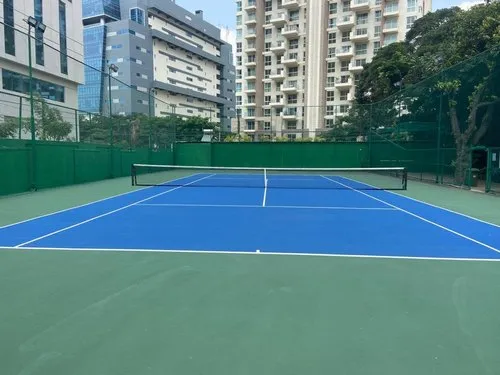
Step-by-Step Installation Guide
1. Site Preparation
- Soil leveling & compaction
- Drainage planning
- PCC or asphalt base preparation
2. Base Construction
- Outdoor courts: Asphalt or concrete base
- Indoor courts: RCC base with perfect leveling
3. Cushion Layer Application
- Improves shock absorption
- Enhances player safety
4. Surface Coating
- Acrylic or PU layers applied
- Textured finish for grip
5. Line Marking
- ITF-approved white lines
- Anti-slip sports paint
Synthetic Tennis Court Flooring System (Layers)
| Layer | Purpose |
|---|---|
| Base Layer | Structural stability |
| Cushion Layer | Shock absorption |
| Surface Layer | Grip & bounce |
| Top Coat | UV & wear resistance |
This layered system ensures long life and professional play conditions.
Synthetic Tennis Court Cost in India (2026)
| Flooring Type | Price Range (₹ / sq ft) |
|---|---|
| Acrylic Flooring | ₹180 – ₹300 |
| PU Flooring | ₹350 – ₹650 |
| Synthetic Turf | ₹250 – ₹500 |
💡 Cost depends on base condition, city, court size, and brand.
Advantages of Synthetic Tennis Courts
✔ All-weather performance
✔ Consistent ball bounce
✔ Lower maintenance than clay
✔ Long lifespan (6–10 years)
✔ Custom color options
✔ ITF-approved surfaces
These benefits make synthetic tennis courts ideal for both commercial and institutional projects.
Synthetic Tennis Court vs Clay vs Grass
| Feature | Synthetic | Clay | Grass |
|---|---|---|---|
| Maintenance | Low | High | Very High |
| Durability | High | Medium | Low |
| Weather Resistance | Excellent | Poor | Poor |
| Cost | Moderate | Moderate | Very High |
Drainage & Slope Requirements
For outdoor synthetic tennis courts:
- Recommended slope: 1:100
- Ensures water runoff
- Prevents surface damage
- Extends flooring lifespan
Proper drainage is essential for Indian weather conditions.
Lighting Requirements for Tennis Courts
| Level | Lighting (Lux) |
|---|---|
| Recreational | 300 lux |
| Training | 500 lux |
| Professional Matches | 750–1,000 lux |
LED sports lights are recommended for energy efficiency.
Synthetic Tennis Court Maintenance Tips
- Regular sweeping & washing
- Avoid sharp objects
- Inspect cracks annually
- Recoat acrylic surface every 4–5 years
- Clean drainage outlets
With proper care, synthetic courts remain playable for years.
Common Mistakes to Avoid
❌ Poor base leveling
❌ Ignoring drainage
❌ Low-quality materials
❌ Incorrect dimensions
❌ Unprofessional installation
Avoiding these mistakes reduces repair costs and downtime.
ITF Standards for Synthetic Tennis Courts
To host official matches, courts must meet:
- Correct dimensions
- Approved surface pace
- Uniform ball bounce
- Slip-resistant surface
Certified contractors ensure ITF compliance.
Synthetic Tennis Court Color Options & Surface Pace
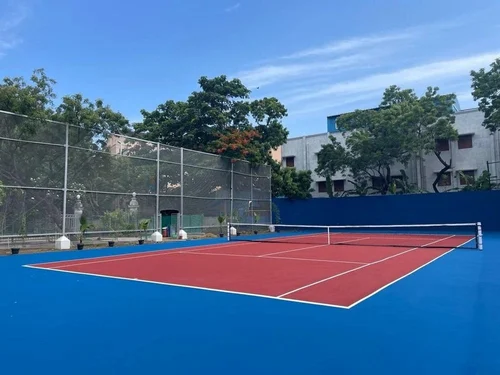
The color and surface texture of a synthetic tennis court directly affect visibility, heat absorption, and playing speed.
Popular Color Combinations
- Blue court with green surrounds (most common)
- Red or green courts for academies
- Custom ITF-approved colors for branding
Surface Pace Categories (ITF)
- Slow Pace: More grip, longer rallies
- Medium Pace: Balanced play (most preferred)
- Fast Pace: Quick rallies, professional tournaments
Selecting the right pace improves player comfort and performance.
Synthetic Tennis Court Cushion System Explained
Cushion systems reduce joint stress and injuries.
Benefits of Cushion Layers:
- Shock absorption
- Reduced fatigue
- Improved grip consistency
- Enhanced comfort for long matches
Cushioned synthetic tennis courts are ideal for academies and high-usage facilities.
Tennis Court Fencing Requirements
A proper fence improves safety and prevents ball loss.
Standard Fence Specifications:
- Height: 10–12 feet (3–3.6 meters)
- Material: GI-coated chain-link
- Mesh Size: 40–50 mm
Optional windbreak fabric improves playing conditions.
Synthetic Tennis Court Net System Standards
| Component | Specification |
|---|---|
| Net Height at Center | 0.914 meters |
| Net Height at Posts | 1.07 meters |
| Net Material | UV-resistant polyester |
| Posts Distance | 0.914 meters outside doubles line |
Using ITF-approved nets ensures match readiness.
Environmental Benefits of Synthetic Tennis Courts
Synthetic courts are environmentally responsible when compared to traditional surfaces.
✔ Reduced water usage
✔ No chemical fertilizers
✔ Long service life
✔ Minimal surface waste
Modern acrylic systems also support eco-friendly coatings.
Synthetic Tennis Court Renovation & Resurfacing
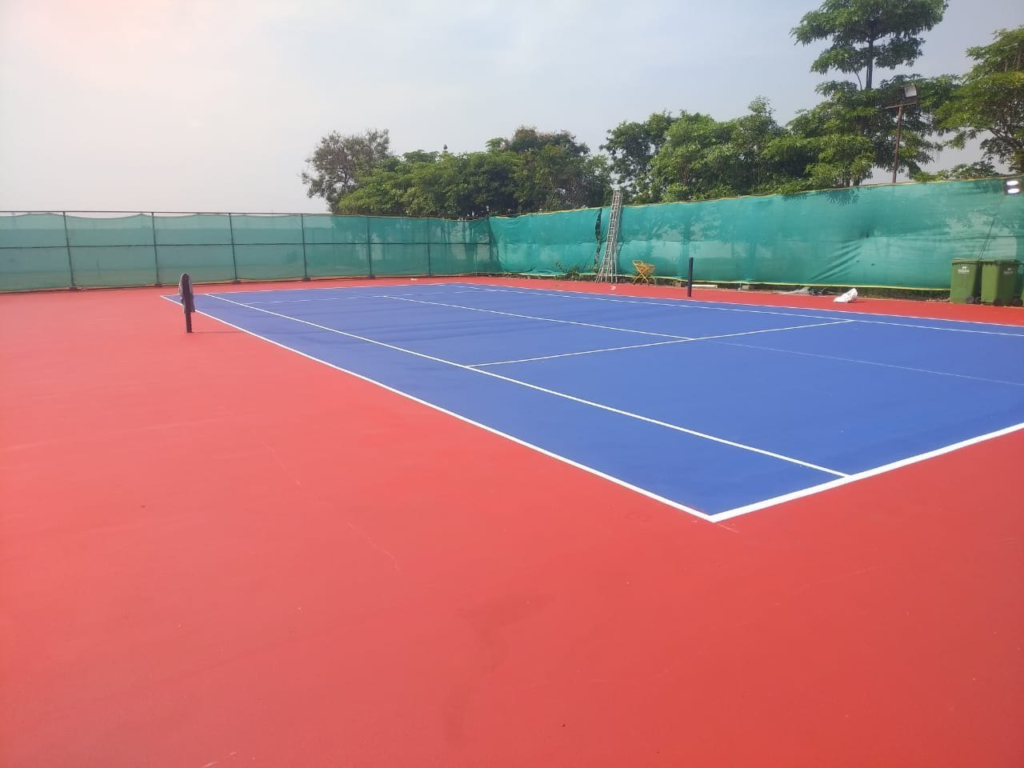
Over time, even the best courts need resurfacing.
When to Resurface?
- Surface cracks visible
- Loss of color & texture
- Inconsistent ball bounce
Resurfacing Process:
- Crack filling
- Surface cleaning
- Acrylic re-coating
- Fresh line marking
Resurfacing restores play quality at a lower cost than rebuilding.
Synthetic Tennis Court Usage Capacity
| Usage Level | Recommended Surface |
|---|---|
| High Traffic | Acrylic with cushion |
| Medium Traffic | Standard acrylic |
| Low Traffic | Synthetic turf |
Correct surface selection prevents early wear.
Government & Institutional Tennis Court Projects in India
Synthetic tennis courts are widely used in:
- Khelo India projects
- Schools & universities
- Sports Authority of India facilities
- Residential societies
Their low maintenance and long life make them ideal for public infrastructure.
How to Choose the Right Synthetic Tennis Court Contractor
Before finalizing a contractor, ensure:
- ITF-standard experience
- Warranty on flooring system
- Clear BOQ & timelines
- Past project portfolio
- Post-installation support
A reliable contractor ensures performance and compliance.
Synthetic Tennis Court Warranty & Lifespan
Most premium systems offer:
- 5–8 years warranty
- Surface lifespan of 8–10 years
- Cushion warranty up to 5 years
Always verify warranty terms in writing.
Safety Standards for Synthetic Tennis Courts
To ensure player safety:
- Non-slip textured surface
- Rounded court edges
- Proper drainage
- Adequate lighting
- Shock-absorbing layers
Safety compliance improves player confidence and reduces injuries.
Extended Final Thoughts
A synthetic tennis court is a future-ready sports surface that combines durability, performance, and cost efficiency. With the right flooring system, expert installation, and timely maintenance, these courts deliver professional-level play for years.
For schools, academies, clubs, and government projects, synthetic tennis court flooring remains the most reliable and scalable solution.
FAQ’s
What is a synthetic tennis court?
A synthetic tennis court is a court made using man-made materials such as acrylic, PU, or synthetic turf, designed to provide consistent ball bounce, durability, and low maintenance.
How long does a synthetic tennis court last?
A well-constructed and properly maintained synthetic tennis court lasts 6 to 10 years, depending on usage, weather conditions, and flooring quality.
Which is the best surface for a synthetic tennis court?
Acrylic flooring is the most commonly used surface due to its durability, consistent performance, and ITF approval for professional play.
Is synthetic tennis court suitable for Indian weather?
Yes, synthetic tennis courts are ideal for Indian climate conditions as they are UV-resistant, water-resistant, and perform well in both hot and rainy seasons.
What is the cost of building a synthetic tennis court in India?
The cost typically ranges between ₹180 to ₹650 per sq ft, depending on the flooring type, base preparation, and location.
Can synthetic tennis courts be used during rain?
Yes, outdoor synthetic courts can be used after rainfall if proper drainage and slope (1:100) are provided to prevent water stagnation.