
Choosing the right tennis court flooring is one of the most important decisions when planning a new court or renovating an existing one. The surface you select directly affects player performance, safety, maintenance cost, and court lifespan. Whether the court is for a school, academy, residential property, or professional facility, selecting the correct flooring ensures long-term value and consistent play.
This guide will help you understand the key factors involved so you can confidently choose the best tennis court flooring for your space.
Table of Contents
1. Understand Your Court Location: Indoor vs Outdoor
The first step is identifying whether your tennis court will be indoor or outdoor.
Outdoor Tennis Courts
Outdoor courts are exposed to sunlight, rain, temperature changes, and dust. Flooring must be:
- UV resistant
- Weatherproof
- Non-slip
- Durable under heavy use
Best options:
- Synthetic acrylic flooring
- Acrylic hard court systems
Indoor Tennis Courts
Indoor courts are protected from weather but must handle continuous play and lighting conditions.
Best options:
- Cushioned acrylic systems
- Synthetic sports flooring
2. Consider the Type of Players
The skill level of players using the court greatly influences flooring choice.
Beginners & Recreational Players
- Require comfort and safety
- Slower ball speed preferred
- Reduced impact on joints
Recommended flooring:
- Cushioned acrylic tennis court flooring
Professional & Competitive Players
- Require consistent bounce
- Faster gameplay
- ITF-compliant surfaces
Recommended flooring:
- ITF-approved acrylic hard court systems
3. Evaluate Surface Performance & Playing Style
Each tennis court surface offers a different playing experience.
| Flooring Type | Ball Speed | Player Movement | Maintenance |
|---|---|---|---|
| Acrylic Hard Court | Medium–Fast | Balanced | Low |
| Synthetic Acrylic | Medium | Comfortable | Very Low |
| Clay Court | Slow | Sliding allowed | High |
| Grass Court | Fast | Low bounce | Very High |
For most modern facilities, synthetic acrylic flooring provides the best balance of performance, safety, and affordability.
4. Assess Climate & Weather Conditions
Climate plays a major role in flooring durability.
- Hot climates: Choose heat-resistant and UV-stable materials
- Rain-prone areas: Flooring must offer excellent drainage and anti-skid properties
- Dusty environments: Smooth, sealed surfaces reduce dust buildup
Synthetic acrylic tennis court flooring performs exceptionally well across different Indian climates.
5. Decide Your Budget & Long-Term Costs
While initial cost matters, lifecycle cost is more important.
Consider:
- Installation cost
- Maintenance expenses
- Repair and resurfacing frequency
- Lifespan of flooring
Acrylic tennis court flooring has a lower long-term cost due to:
- Minimal maintenance
- Easy resurfacing
- Long service life (8–10 years with proper care)
6. Check Maintenance Requirements
Some surfaces demand frequent care, while others are low maintenance.
- High maintenance: Clay & natural grass
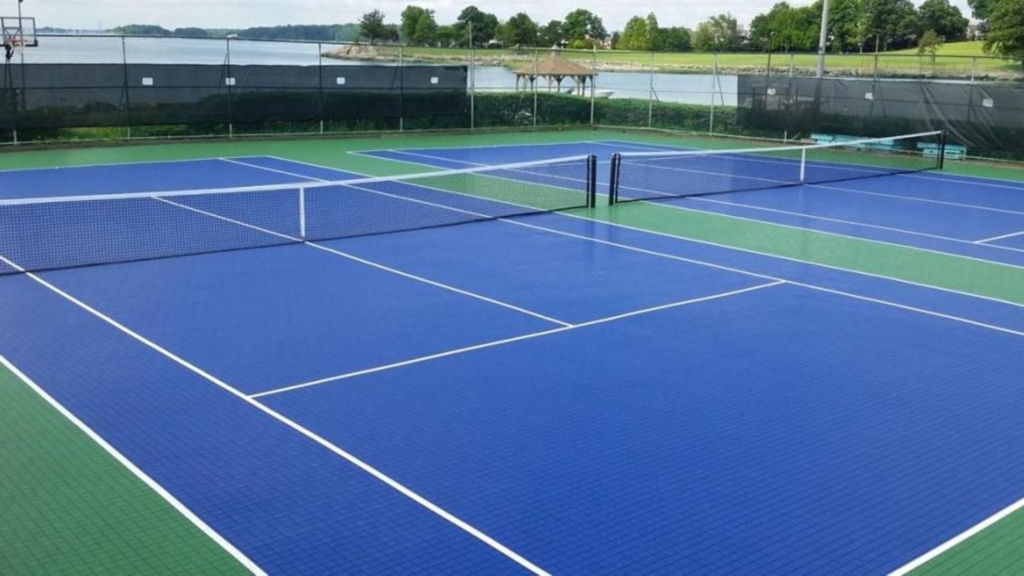
- Low maintenance: Acrylic & synthetic flooring
If you want a court that is easy to clean, quick-drying, and cost-effective, acrylic-based systems are ideal.
7. Safety & Player Comfort
Player safety should never be compromised.
Key safety features to look for:
- Anti-slip texture
- Shock absorption
- Crack-resistant surface
- Even ball bounce
Cushioned tennis court flooring systems help reduce stress on knees, ankles, and hips, making them perfect for training academies and schools.
8. Compliance with Standards
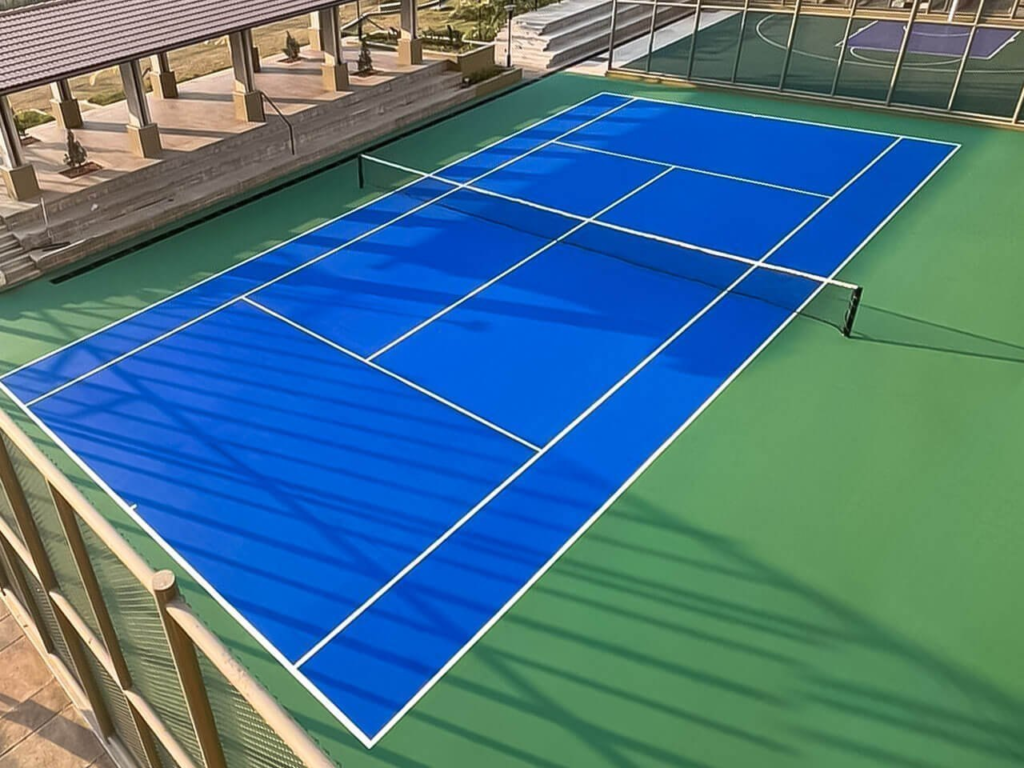
If the court is intended for tournaments or professional training, ensure it meets ITF (International Tennis Federation) standards.
Check for:
- Approved surface classification
- Correct court dimensions
- Line marking accuracy
- Surface speed rating
ITF-approved acrylic flooring systems are widely used in competitive tennis facilities.
9. Choose the Right Base Foundation
A strong base ensures flooring performance and longevity.
- Concrete base: Most stable and long-lasting
- Asphalt base: Flexible and cost-effective
Proper slope and drainage must be included to prevent water stagnation and surface damage.
10. Select a Trusted Flooring Contractor
Even the best materials can fail with poor installation.
Choose a contractor who offers:
- Certified materials
- Skilled installation team
- After-installation support
- Maintenance guidance
An experienced tennis court flooring provider ensures quality workmanship and long-term durability.
Conclusion
Choosing the right tennis court flooring depends on location, player type, climate, budget, and maintenance needs. For most residential, commercial, and professional courts, synthetic acrylic tennis court flooring stands out as the most reliable, cost-effective, and performance-driven option.
Investing in the right surface today ensures better gameplay, enhanced safety, and reduced maintenance costs for years to come.
FAQ’s
What is the best tennis court flooring for residential use?
Synthetic acrylic tennis court flooring is ideal for residential spaces because it is durable, low maintenance, weather-resistant, and cost-effective.
Which tennis court flooring is best for outdoor courts?
Acrylic and synthetic acrylic flooring are best for outdoor tennis courts as they are UV-resistant, waterproof, and provide excellent anti-slip performance.
How do I choose tennis court flooring based on climate?
In hot or humid climates, choose UV-stable and heat-resistant surfaces like synthetic acrylic flooring. For rain-prone areas, ensure proper drainage and non-slip texture.
Is cushioned tennis court flooring better for players?
Yes, cushioned tennis court flooring reduces impact on joints, improves comfort, and helps prevent injuries, making it ideal for academies, schools, and training courts.
What is the lifespan of tennis court flooring?
High-quality acrylic tennis court flooring typically lasts 8 to 10 years, depending on usage, maintenance, and weather conditions.