
Choosing the right tennis court flooring is a crucial decision that affects player performance, surface life, and overall gameplay experience. Among the most popular options today are acrylic tennis court flooring and synthetic tennis court flooring. Both offer unique advantages from speed and durability to comfort and maintenance needs.
In this guide, we’ll break down the key differences, performance factors, and ideal use cases to help you decide which flooring is best for your tennis court project.
Understanding the Basics
2.1 What Is Acrylic Tennis Court Flooring?
Acrylic tennis court flooring is a hard-court system made from high-quality acrylic resins, silica sand, and color pigments. The surface is applied in multiple layers over a concrete or asphalt base, creating a seamless, non-porous finish that delivers consistent ball bounce and speed.
Key Characteristics of Acrylic Flooring:
- Multi-layer coating system (usually 5–9 layers)
- UV-resistant and weatherproof
- Ideal for outdoor installations
- ITF-approved for tournament use
- Easy to maintain and long-lasting
Because of its durability and high performance, acrylic flooring is used in professional tennis tournaments, sports academies, and outdoor club courts. It provides players with a fast-paced surface and superior traction for better control and movement.
2.2 What Is Synthetic Tennis Court Flooring?
Synthetic tennis court flooring is made from polyurethane (PU), polyvinyl chloride (PVC), or rubber-based materials. It is designed to offer greater comfort and shock absorption, making it a popular choice for indoor courts and multi-sport complexes.
Key Characteristics of Synthetic Flooring:
- Cushioned and flexible surface
- Excellent shock absorption for joints
- Suitable for indoor or semi-covered areas
- Multi-purpose usage (badminton, basketball, and tennis)
- Moderate weather resistance
Synthetic flooring provides a softer playing experience, reducing the impact on knees and joints. However, it may not deliver the same bounce consistency as acrylic courts, making it more suitable for training centers, schools, and recreational facilities rather than professional tournaments.
Key Differences Between Acrylic and Synthetic Flooring
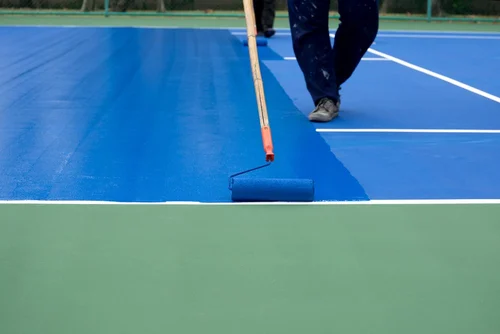
Both acrylic and synthetic tennis court flooring systems offer excellent performance, but they differ in several important aspects, including surface texture, comfort, maintenance, cost, and suitability. Understanding these distinctions will help you choose the right surface for your facility based on location, player type, and budget.
3.1 Surface Type and Playing Experience
- Acrylic Flooring: Hard, smooth surface that provides faster ball bounce and better traction. Ideal for professional-level matches and outdoor courts.
- Synthetic Flooring: Soft, cushioned surface designed for comfort and joint protection. Offers slower ball speed and is preferred for recreational or multi-sport use.
3.2 Durability and Lifespan
- Acrylic: Highly durable and weather-resistant. With minimal maintenance, it can last 5–7 years before resurfacing is needed.
- Synthetic: Slightly less durable outdoors, especially under constant sun exposure. Expected lifespan is 6–8 years indoors with proper care.
3.3 Installation and Cost
- Acrylic Flooring: Installed directly over asphalt or concrete with multiple acrylic coating layers. Cost-effective and faster to install.
- Synthetic Flooring: Requires a sub-base and cushioning layer, making installation more complex and relatively more expensive.
| Feature | Acrylic Flooring | Synthetic Flooring |
|---|---|---|
| Surface Type | Hard, seamless finish | Soft, cushioned texture |
| Bounce Speed | Fast | Medium |
| Comfort Level | Moderate | High |
| Weather Resistance | Excellent | Moderate |
| Maintenance | Low | Moderate |
| Installation Cost | ₹80 – ₹150 per sq. ft | ₹180 – ₹300 per sq. ft |
| Ideal Use | Outdoor & professional courts | Indoor or multi-purpose courts |
3.4 Maintenance and Cleaning
- Acrylic Courts: Require minimal upkeep. Regular washing and occasional resurfacing keep the surface in excellent condition.
- Synthetic Courts: Need consistent cleaning to prevent dust accumulation and surface dullness. Recoating may be required after a few years of heavy use.
3.5 Performance and Player Comfort
- Acrylic Flooring: Offers a quicker pace of play, perfect for players who enjoy fast rallies and precise control.
- Synthetic Flooring: Provides greater comfort and injury prevention due to its shock-absorbing properties, ideal for beginners and children.
3.6 Climate and Location Suitability
- Acrylic: Performs best in hot, humid, or rainy climates — perfect for outdoor conditions across India.
- Synthetic: Recommended for controlled indoor environments where temperature and moisture levels are stable.
Summary: Which One to Choose?
- Choose Acrylic Tennis Court Flooring if you want:
- A professional-grade, ITF-approved surface
- Long-lasting outdoor durability
- Faster gameplay and low maintenance
- Choose Synthetic Tennis Court Flooring if you need:
- Indoor or multi-purpose sports use
- High comfort and shock absorption
- A cushioned surface for training or recreation
Performance Comparison
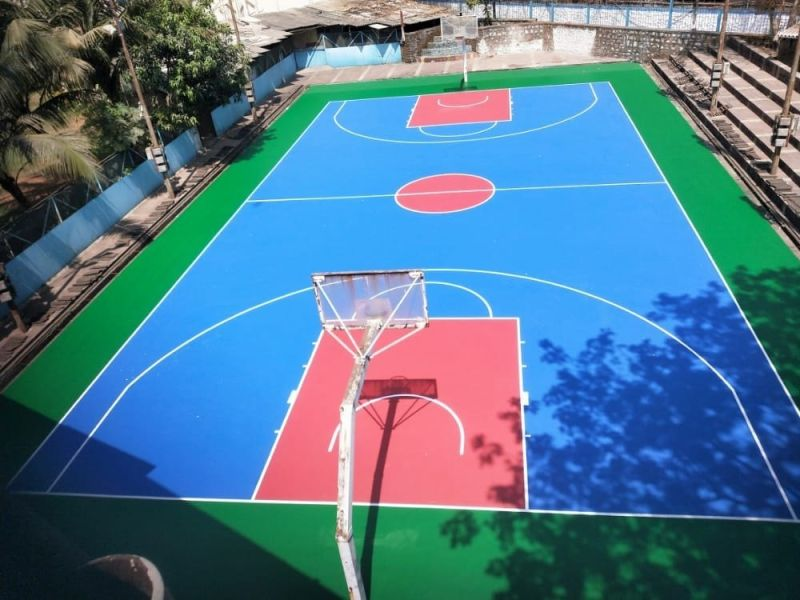
When selecting the right tennis court surface, performance plays a key role — influencing the speed, grip, comfort, and consistency of the game. Both acrylic and synthetic tennis court flooring perform well, but they cater to different levels of play and player preferences.
4.1 Ball Speed and Bounce Quality
- Acrylic Flooring: Known for its fast ball bounce and consistent speed. The smooth, hard surface allows for precise control and quick rallies, making it ideal for professional matches and tournaments.
- Synthetic Flooring: Offers a medium-paced bounce due to its cushioned texture. While it provides more comfort, the ball speed is slightly slower — suitable for training sessions and recreational games.
Verdict:
If you prefer faster gameplay and competitive performance, acrylic courts are the superior choice.
4.2 Traction and Grip
- Acrylic: The textured top layer enhances player grip, preventing slips even during rapid movements. The anti-skid coating ensures consistent traction in both dry and damp conditions.
- Synthetic: Provides moderate grip but prioritizes cushioning. It reduces impact on joints, making it safer for younger or older players.
Verdict:
For high-speed movement and precision, acrylic offers better traction. For comfort and safety, synthetic wins.
4.3 Comfort and Impact Absorption
- Acrylic Flooring: Being a hard surface, it offers limited shock absorption. Long training sessions can be more physically demanding on the knees and joints.
- Synthetic Flooring: Designed for comfort, with a cushioned base that absorbs shocks effectively, reducing fatigue during extended play.
Verdict:
For comfort and joint protection, synthetic surfaces are better. For performance-driven play, acrylic is the preferred option.
4.4 Weather and Environmental Performance
- Acrylic Courts: Highly weather-resistant and suitable for outdoor conditions. They handle UV exposure, rain, and temperature variations effectively.
- Synthetic Courts: Better suited for indoor environments, as prolonged exposure to sunlight can reduce their lifespan and cause color fading.
Verdict:
For outdoor courts in India’s climate, acrylic flooring performs far better.
4.5 Long-Term Play Consistency
- Acrylic Flooring: Maintains uniform speed and bounce over time with minimal surface degradation.
- Synthetic Flooring: Can lose its elasticity and grip over the years, requiring more frequent maintenance.
Verdict:
In terms of long-term consistency and reliability, acrylic flooring leads the way.
Overall Performance Summary
| Performance Factor | Acrylic Flooring | Synthetic Flooring |
|---|---|---|
| Ball Speed | Fast | Medium |
| Bounce Quality | Consistent | Cushioned |
| Traction | Strong | Moderate |
| Comfort Level | Moderate | High |
| Weather Suitability | Outdoor (All-weather) | Indoor (Controlled) |
| Durability | Long-lasting | Moderate |
| Ideal Use | Tournaments, Academies | Indoor & Training Centers |
Cost Analysis: Acrylic vs Synthetic Flooring
When planning a tennis court, one of the most critical considerations is cost — not just the upfront installation cost, but long-term value, maintenance, and lifespan. In this section, we compare the costs of acrylic and synthetic tennis court flooring, especially in the Indian context.
5.1 Typical Cost Ranges in India
Here are some cost indicators from recent data for India:
- For a standard acrylic court (materials + installation) the cost is cited as around ₹ 8–12 lakhs for a full court.
- For a cushioned or higher-spec acrylic system the cost may rise to ₹ 12–18 lakhs or more.
- One manufacturer mentions synthetic acrylic flooring (outdoor) material cost in the range of ₹ 65 – ₹ 110 per sq ft (excluding base preparation) for outdoor sports court surfacing. Pace Court
- Another source for PU/PU-type synthetic flooring (for multi-sport or indoor use) gives installation cost ranges like ₹ 150-220 per sq ft vs acrylic ₹ 75-110 per sq ft.
Key takeaway: Acrylic systems tend to be less expensive upfront than specialized synthetic (PU/PVC) systems, especially in multi-layer or cushioned installations.
5.2 Cost Comparison Table
| Flooring Type | Approx Cost* | Lifespan | Maintenance Needs | Suitable For |
|---|---|---|---|---|
| Acrylic Flooring | ₹ 75-110 per sq ft (material) / ₹ 8-12 lakhs full court | 5-7 years before resurfacing | Low | Outdoor courts, schools, clubs |
| Synthetic (PU/PVC/Cushioned) | ₹ 150-220 per sq ft or higher | 6-8 years (indoor use) | Moderate to High | Indoor courts, multi-sport, high-comfort installations |
*Approximate values based on available Indian market data; actual costs depend on base work, site conditions, number of layers, color coat, accessories.
5.3 What Drives the Cost Differences?
Several factors affect cost and cause variation between acrylic vs synthetic systems:
- Number of layers and type of coating: More cushion layers (in synthetic systems) add cost in materials and labour.
- Sub-base and site preparation: A solid, level asphalt or concrete base is essential. If major civil work is required (crack repair, leveling), cost rises.
- Material type: Acrylic resins vs PU/PVC layers differ in cost of raw materials and manufacture.
- Installation complexity: Synthetic systems often require more skilled labour (for cushioning, rubber granules, special coatings) than simpler acrylic systems.
- Location & climate: Outdoor courts in harsh environments need weather-resistant top coatings, increasing cost slightly.
- Maintenance and longevity considerations: While synthetic systems may cost more upfront, some clients choose them for added comfort/brand value; however the higher cost may not always return proportionally more lifespan in outdoor conditions. One article notes “While PU costs almost twice as much, it doesn’t deliver twice the durability.”
5.4 Long-Term Value & Total Cost of Ownership
It’s important to look beyond initial cost and calculate total cost of ownership (TCO):
- Resurfacing Frequency: Acrylic courts typically require resurfacing every 5–7 years; synthetic may require more frequent recoating or higher upkeep.
- Weather Resilience: Acrylic outdoor surfaces are highly weather resistant (UV, rain) and thus may offer lower maintenance cost in Indian outdoor conditions.
- Usage Level: A heavily used court (training facility) may benefit from the comfort features of synthetic, but for general outdoor club/residential use acrylic may deliver better ROI.
- Downtime & Repairs: Simpler acrylic systems often have faster installation/repair turnaround, reducing downtime cost.
- Maintenance Costs: Synthetic systems, especially cushioned ones, may require more frequent cleaning/maintenance, increasing annual cost.
5.5 What This Means for Your Decision
- If your budget is constrained and you are building an outdoor tennis court (club, residential, school) in Indian conditions — investing in a high-quality acrylic system gives you the best value for money.
- If you are building an indoor facility, or one used intensively (training academy, multi-sport centre) and you prioritise player comfort and brand premium, a synthetic cushioned system may justify the higher cost—provided you factor in ongoing maintenance and lifecycle costs.
- Always include site-specific estimates (base condition, civil works, drainage, accessories) and ask for a detailed breakdown of layers, materials, labour.
- Consider preparing for future resurfacing cost in your budget — often overlooked.
Maintenance and Durability
When investing in a tennis court, long-term performance depends not only on installation quality but also on how well the surface withstands wear, weather, and maintenance cycles. Both acrylic and synthetic tennis court flooring are durable, but they differ in their resistance to elements, repair needs, and lifespan.
6.1 Maintenance Requirements
Acrylic Tennis Court Flooring
Acrylic courts are known for their low-maintenance nature. Once installed properly, they require only periodic cleaning and resurfacing every few years to maintain appearance and play quality.
Typical Maintenance Tasks:
- Regular sweeping to remove dust and debris
- Occasional washing with mild detergent and water
- Resurfacing every 5–7 years
- Crack filling if the base shifts or expands
Because the surface is non-porous and UV-resistant, acrylic courts are less prone to fading, algae growth, or water damage — making them ideal for outdoor Indian conditions.
Synthetic Tennis Court Flooring
Synthetic surfaces such as PU, PVC, or rubber-based systems are softer and cushioned, which means they require more careful maintenance to preserve texture and elasticity.
Typical Maintenance Tasks:
- Routine cleaning using non-abrasive equipment
- Inspection of seams or joints for detachment
- Recoating or sealing every 4–6 years (depending on use)
- Avoiding sharp footwear or heavy equipment to prevent tearing
While synthetic flooring is easier on players’ joints, it can lose its grip or cushioning over time if exposed to heat, moisture, or heavy usage.
6.2 Durability Comparison
| Feature | Acrylic Flooring | Synthetic Flooring (PU/PVC/Rubber) |
|---|---|---|
| Average Lifespan | 5–7 years before resurfacing | 6–8 years (mainly indoors) |
| Weather Resistance | Excellent (UV, rain, heat) | Moderate (best for indoor or shaded courts) |
| Impact Resistance | Medium (firm surface) | High (soft and cushioned) |
| Maintenance Frequency | Low | Medium to High |
| Resurfacing Cycle | Every 5–7 years | Every 4–6 years |
| Common Issues | Cracks if base shifts | Peeling, joint separation, or loss of elasticity |
6.3 Which Flooring Lasts Longer?
In outdoor environments, acrylic flooring generally lasts longer because it can handle UV exposure, rain, and temperature fluctuations without major degradation.
In indoor settings, synthetic flooring can outperform acrylic in terms of comfort and longevity, especially when well-maintained and protected from environmental stress.
6.4 Expert Insight
According to surface specialists, durability is strongly tied to base preparation and layer quality — not just the surface material. A poorly leveled or cracked base can shorten the life of either system.
Using high-quality primers, cushion coats, and topcoats ensures that both acrylic and synthetic systems deliver maximum lifespan and minimal maintenance.
6.5 Verdict
- For outdoor courts exposed to harsh climates — choose Acrylic Flooring for its weatherproof, long-lasting surface and minimal upkeep.
- For indoor or high-performance training facilities — choose Synthetic Flooring for enhanced comfort and joint protection, provided regular maintenance is feasible.
Best Choice for Different Users
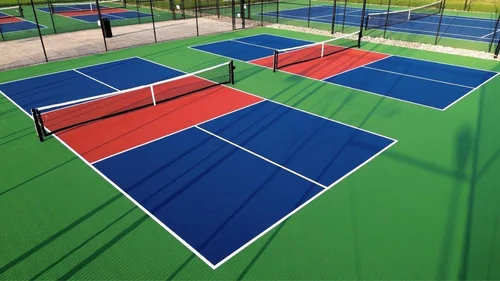
The right tennis court flooring depends on who will use the court, how often, and where it’s installed. Each flooring type — Acrylic or Synthetic — offers unique benefits tailored to different users, from professional players to schools and recreational clubs.
7.1 For Professional Tennis Players and Tournaments
Best Choice: 🎾 Acrylic Tennis Court Flooring
Acrylic courts are widely approved by the International Tennis Federation (ITF) and are used in professional tournaments worldwide. They provide a consistent ball bounce, fast playing speed, and precise traction — all of which are crucial for competitive play.
Why it’s ideal:
- ITF-rated surface performance
- True ball rebound and even speed
- Excellent grip for high-intensity matches
- Long-lasting under frequent use
Acrylic surfaces are also preferred by sports academies and training centers that focus on replicating professional playing conditions.
7.2 For Schools and Educational Institutions
Best Choice: 🏫 Acrylic or Synthetic Flooring (based on budget)
Schools typically need surfaces that balance durability, safety, and cost.
- Acrylic flooring is ideal for outdoor school courts due to its low maintenance and weather resistance.
- Synthetic flooring works well for indoor multi-sport areas because it’s softer and minimizes impact injuries.
Why it’s ideal:
- Cost-effective over time
- Low maintenance (acrylic)
- Cushioned comfort for kids (synthetic)
- Safe for multipurpose sports activities
7.3 For Sports Academies and Training Centers
Best Choice: 🏆 Synthetic Flooring (Cushioned PU or Rubber)
Training centers where players practice for hours daily benefit from shock-absorbing synthetic flooring. It reduces stress on joints and muscles, preventing fatigue and injuries.
Why it’s ideal:
- Comfortable for extended play sessions
- Customizable cushion levels
- High traction and anti-slip surface
- Suitable for multiple indoor sports
However, many academies opt for a hybrid system — acrylic with cushioned underlayers — to achieve both performance and comfort.
7.4 For Residential or Private Courts
Best Choice: 🏡 Acrylic Tennis Court Flooring
Homeowners building private courts usually prefer acrylic flooring because it’s cost-effective, easy to clean, and blends aesthetically with outdoor spaces.
Why it’s ideal:
- Low upkeep and long lifespan
- Resistant to rain, UV rays, and dirt
- Affordable installation cost
- Available in multiple color finishes
7.5 For Commercial Sports Complexes and Clubs
Best Choice: 🏢 Synthetic Flooring
Sports complexes that host multiple games (tennis, badminton, basketball) prefer synthetic flooring for its multi-sport versatility and aesthetic appeal.
Why it’s ideal:
- Suitable for indoor and semi-outdoor use
- High comfort for players
- Supports various sports on one surface
- Professional look and smooth finish
7.6 Summary Table: Who Should Choose What
| User Type | Recommended Flooring | Key Benefits |
|---|---|---|
| Professional Players | Acrylic Flooring | Tournament-grade surface, consistent bounce |
| Schools | Acrylic / Synthetic | Safe, affordable, and low maintenance |
| Training Academies | Synthetic Flooring | Cushioned comfort and injury prevention |
| Residential Users | Acrylic Flooring | Weatherproof, cost-effective, easy to maintain |
| Commercial Sports Clubs | Synthetic Flooring | Multipurpose, durable, and premium look |
7.7 Final Recommendation
If your primary goal is performance, longevity, and low maintenance, Acrylic Tennis Court Flooring is the smarter choice for outdoor projects.
If your focus is on comfort, versatility, and indoor sports applications, go with Synthetic Flooring.
In many modern installations, a hybrid system combining both materials — cushioned base with acrylic top layers — offers the best of both worlds.
Conclusion
Both acrylic and synthetic tennis court flooring systems have unique benefits depending on your budget, usage, and location. Acrylic is perfect for professional play and Indian climates, while synthetic offers unmatched comfort for indoor courts.
If you’re planning a new tennis court or resurfacing project, consult the experts at TennisFlooring.com for ITF-certified, high-performance tennis court surfaces built to last.
FAQ’s
Which tennis court flooring lasts longer — acrylic or synthetic?
Acrylic flooring generally lasts longer, especially in outdoor environments, with minimal maintenance.
Who is the leading Tennis Court Flooring Manufacturer in India?
The market for high-quality tennis court surfaces in India is served by several major manufacturers and suppliers specializing primarily in synthetic acrylic flooring. A key provider in this segment is Tennis Flooring, known across India for delivering and installing professional-grade, ITF-certified synthetic acrylic systems.
Can synthetic tennis flooring be used outdoors?
It can be, but it’s not recommended for prolonged sun exposure due to UV sensitivity.
How often should acrylic courts be resurfaced?
Typically every 5–7 years, depending on usage and weather conditions.
Which surface provides better comfort?
Synthetic flooring offers better comfort and shock absorption, ideal for indoor or recreational play.